By Tirthankar Mitra
Mexico has seen the riots over the killing of a drug lord many times in the past: a man at the head of a criminal empire falls, and the country holds its breath for the aftershocks. Now a long trek awaits it to bring back a balance of power after the death of another mafia El Mencho.
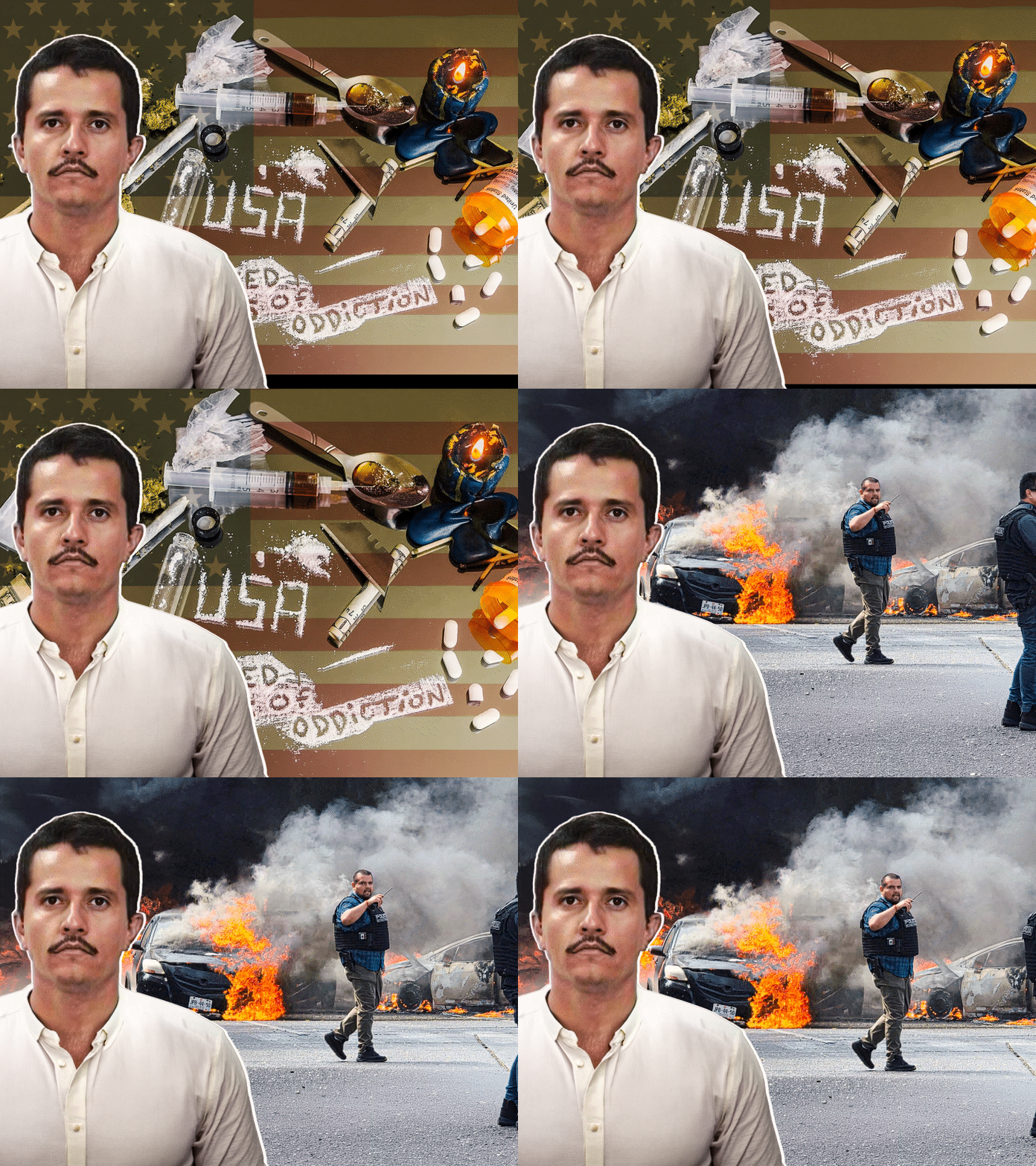
The death of Nemesio Oesguera Cervantes better known as El Mencho has produced a pause. And it is not a quiet one. It is noisy and it is violent. For the houses are shuttered and streets filled with burning vehicles with a surge of soldiers.
One is tempted to treat the moment when a decisive blow has been struck against drug mafia. It is not. It is merely a hinge in a longer struggle over who truly governs large part of Mexico. So the issue is much larger and much more complex.
For years El Mencho has built which is closer to a cartel than a gang. .Logistics, territorial managers, propaganda and a talent pipeline replaced fallen commanders quickly.
That is why the state’s success against one individual immediately triggered coordinated disruption across several cities. Road blocks, ambushes and arson were more than acts of revenge for El Mencho’s killing. They were a message. It was conveyed to rivals and residents alike that authority remains contested.
In places like Puerto Vallarta and the outskirts of Guadalajara the question on ordinary days is not who rules in theory. It is who can close a highway in practice. The government of President Claudia Sheinbaum has responded with numbers. It has deployed thousands of troops, armoured vehicles and checkpoints to speak the language of order.
It is a necessary act. No state can allow armed groups to stage a rolling veto over daily life. Yet the arithmetic of force has limits. Successive Mexican security institutions have learned, that decapitation strategies create succession markets. A cartel’s symbolism is broken. But it’s incentives to produce continuity is sharpened.
The National Guard can clear a road. But it cannot dissolve the business model of crime that makes roads worth blocking. This model is based on extortion, ports, fuel theft, synthetic drugs and quiet capture of municipal budgets. It survived because prosecutors are overmatched, courts are slow, prisons leak command authority and money moved faster than warrants. Killing a kingpin changes the cast. The script remains the same.
There is a harder path. It happens when asset seizures truly stick, prosecutors can protect witnesses and judges finish cases. It means treating ports, customs and trucking routes as strategic terrain. .Given the circumstances, this is not a cake walk. Mexican government deserves credit for tackling a figure who represented impunity. But credit is not closure.
The real test of normalcy will be six months from now when shopkeepers can reopen without paying tax to fear, whether mayors can govern without escorts, and whether a crime cartel can choreograph a city’s closure on cue. These answers haves to change. Only then, will the moment mark more than the end of a man. (IPA Service)
 Greens Candidate Hannah Spencer’s Seismic Win Shows British Politics Is Changing Fast