By D. Raja
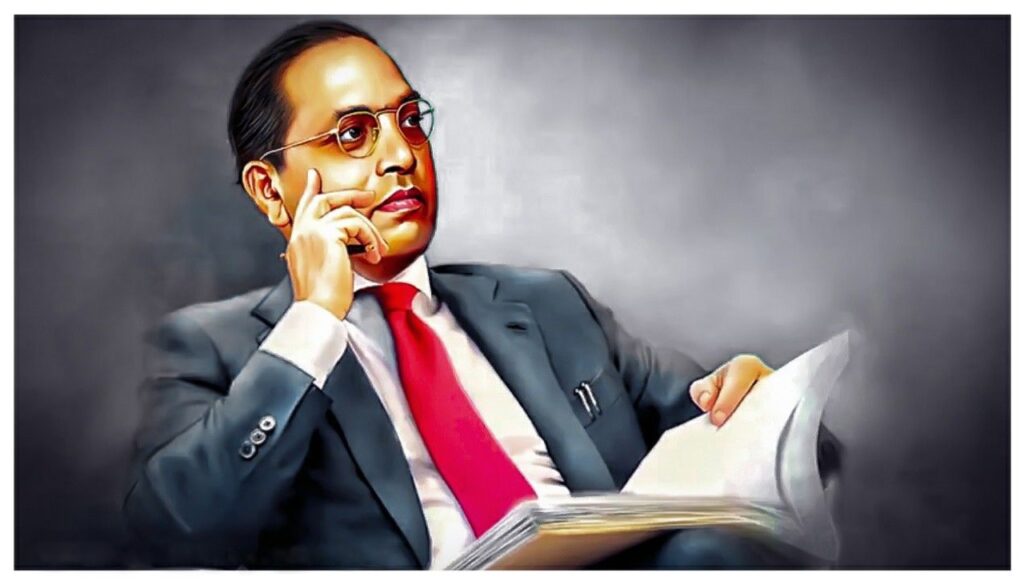
The outrage triggered among certain socially dominant sections against the UGC’s Promotion of Equity in Higher Education Institutions Regulations, 2026 has reaffirmed, with renewed force, B R Ambedkar’s profound characterisation of the caste system as representing “an ascending order of reverence and a descending order of contempt.” The sharp reaction to these regulations exposes the deep unease among privileged social groupings when institutional mechanisms attempt to address entrenched inequalities.
It is worth recalling that the Equity Regulations were framed to provide institutional remedies to students belonging to SC, ST and OBC categories, as well as women, persons with disabilities and those covered under the Economically Weaker Sections. The regulations enabled such students to register complaints when they faced discrimination or ill-treatment on account of their identities—an essential safeguard in campuses that have repeatedly been shown to be socially exclusionary spaces.
The intensity of the protests against these guidelines is particularly striking given that they were framed by the University Grants Commission on the directions of the Supreme Court of India. These directions emerged from petitions filed in 2019 by Abeda Salim Tadvi and Radhika Vemula, the mothers of Payal Tadvi and Rohith Vemula respectively. Both Rohith and Payal were driven to suicide after enduring sustained discrimination rooted in caste prejudice. Their mothers approached the apex court seeking systemic measures to end discrimination and to make higher educational institutions more inclusive and humane.
The 2026 regulations marked a significant departure from earlier guidelines by mandating the establishment of monitoring committees and introducing a non-compliance clause—provisions that were conspicuously absent earlier. These additions made implementation obligatory for universities and colleges. It is this enforceability, rather than the principle of equity itself, that appears to have unsettled entrenched interests. Opposition was articulated on the grounds that the monitoring committees— comprising members from SCs, STs, OBCs, women, persons with disabilities and EWS—did not explicitly include representation from socially dominant castes. This argument was deeply flawed, as the EWS category primarily covers those from traditionally privileged caste locations, and the regulations also provide for the inclusion of two professors, with the Vice-Chancellor heading the committee.
The mandatory compliance provision simply required institutions to actively prevent discrimination, rather than treating equity as a matter of discretion or goodwill. The new regulations were framed against the backdrop of officially acknowledged data showing that incidents of caste-based discrimination in higher educational institutions have risen by more than 100 per cent over the past five years. The constitutional promise of dignity to students has been repeatedly violated, impairing their academic pursuit and psychological well-being. Persistent humiliation, stereotyping and the mocking of ascribed identities have, in extreme cases, driven students to take their own lives. The intent of the 2026 guidelines was therefore to protect marginalised students and to transform universities into spaces informed by justice, equity and human dignity.
As advocate Disha Wadekar, appearing for the petitioners in the Supreme Court, succinctly explained: “The equity regulations are designed to prevent discrimination based on structural or group identities, such as caste, gender, religion, place of birth, or disability. They address historic disadvantages and systemic discrimination, not individual harassment, which any student might face.” Dispelling the contrived narrative that socially privileged students were being excluded, she further noted: “Upper-caste students already have access to remedies under the UGC’s 2023 Student Grievance Redressal Regulations, which are caste-, gender- and religion-neutral, as well as the 2009 anti-ragging regulations.” She correctly described claims that the equity rules exclude such students as misleading, adding that individuals from dominant caste locations can still report discrimination based on gender, disability or other protected identities. “These regulations aim to correct systemic inequities, not individual grievances,” she asserted.
It is therefore evident that the UGC’s 2026 Equity Regulations—now stayed by the Supreme Court—are inclusive in scope and intent. The hostility directed at them reflects not exclusion, but resistance to constitutional values of justice and equality. The agitation mounted by sections of upper castes, including several figures affiliated with the ruling dispensation, fits squarely within Ambedkar’s analysis of caste as a system that protects privilege while normalising contempt for those placed lower in the hierarchy.
Indian history offers ample evidence of how caste-based contempt survives across time and social status. Swami Vivekananda, who famously mesmerised audiences in America with his speeches on Vedanta in 1893, was subjected to caste abuse in India. In his address titled “My Campaign Plan”, delivered in erstwhile Madras, he recalled being told that he had no right to become a Sannyasi because he was considered a Shudra by birth. Responding with characteristic clarity, Vivekananda said, “I am not at all hurt if they call me a Shudra,” adding that it would be “a little reparation for the tyranny of my ancestors over the poor.” He went on to declare, “If I am a Pariah, I will be all the more glad, for I am the disciple of a man whom the Brahmin of Brahmins wanted to cleanse the house of a Pariah.”
Similarly, when K. R. Narayanan was elected President in 1997, sections of the media asked him how it felt to be the “first Dalit President,” even though caste played no role in his elevation to the highest constitutional office. His response—”A President is a President”— quietly but firmly exposed the prejudice embedded in the question itself.
More recently, the incident involving Chief Justice B. R. Gavai, who hails from a humble background and professes Buddhism, revealed how caste-based contempt continues to be expressed brazenly, irrespective of constitutional position. An advocate hurled a shoe at him in court while shouting, “Sanatan Dharma ka apman nahin sahega Hindustan.” Disturbingly, this act was celebrated within sections of the Hindutva ecosystem, laying bare the contradiction between professed civilisational pride and actual social practice.
The agitation against the UGC Equity Regulations thus exposes the hollowness of Hindutva’s claim to be a unifying force transcending caste. Ambedkar had warned that caste is not merely a division of labour but a division of labourers—a system of graded inequality. Hindutva, far from annihilating caste, reproduces this graded hierarchy by freezing social relations into rigid, unequal structures. It envisions not a casteless Hindu society, but one permanently organised around inherited privilege and subordination.
It is therefore unsurprising that the protests against the Equity Regulations largely emanated from segments linked to the Sangh Parivar, revealing the RSS-BJP’s deep unease with substantive equality. While the UGC must also bear responsibility for ignoring several recommendations of the Parliamentary Standing Committee on Education— particularly those emphasizing wider consultation and clearer safeguards—the central issue remains political. Hindutva stands exposed as an ideology that breeds inequality, not only between religious communities but also within Hindu society itself. As Ambedkar repeatedly argued, caste is anti-national, and resistance to measures aimed at annihilating caste and upholding equity amounts to resistance to the constitutional vision of India. (IPA Service)
(Author is General Secretary, Communist Party of India)
 Unemployment In India Rose For The Third Consecutive Month In January 2026