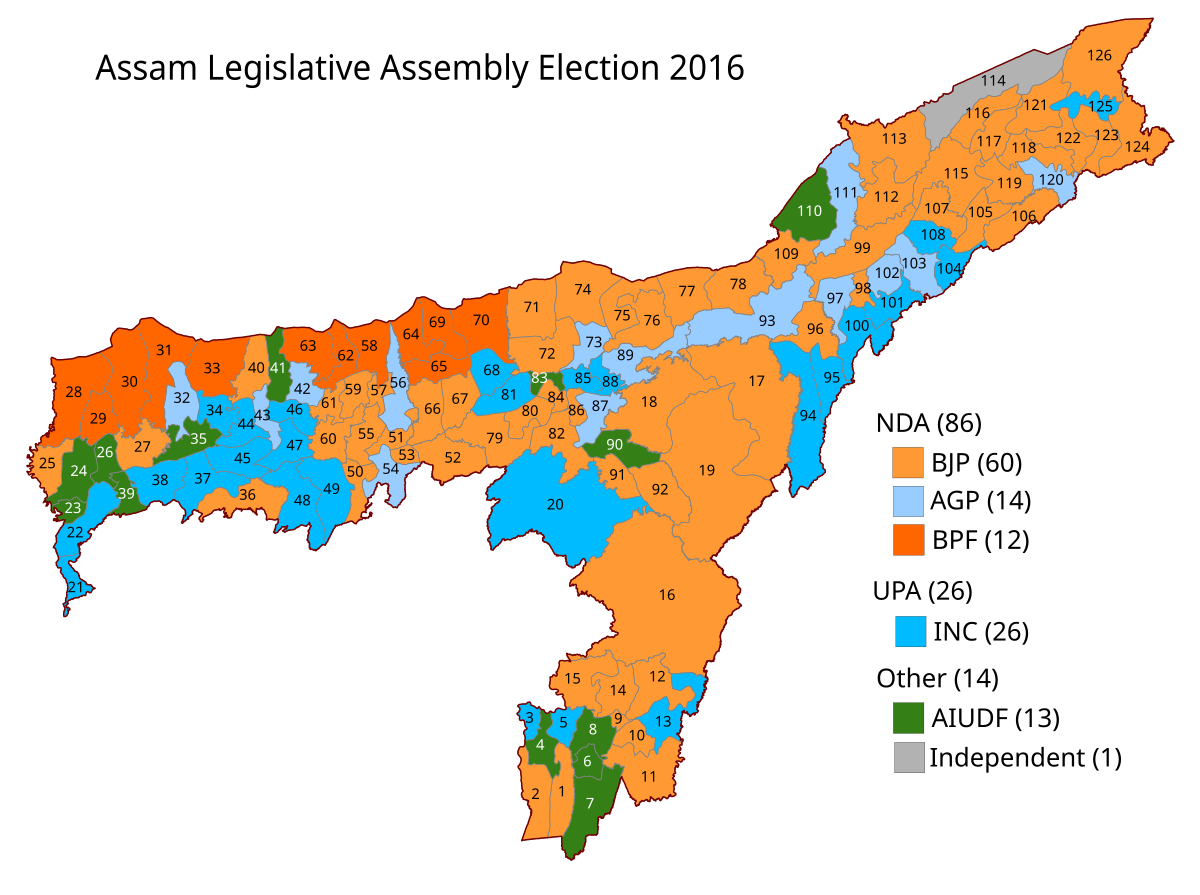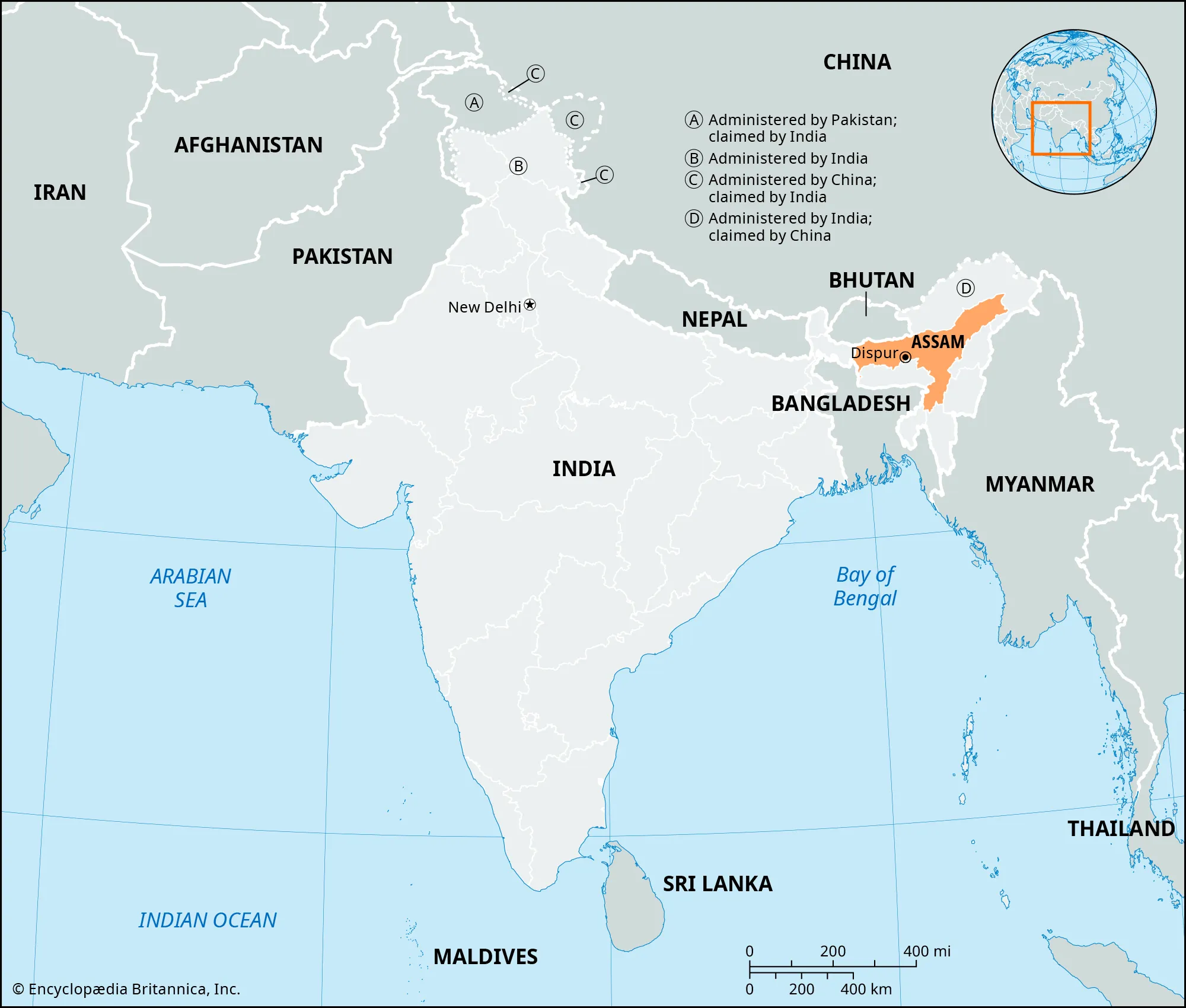
All India United Democratic Front MLA and General Secretary Rafiqul Islam has cautioned that the Congress party faces a pressing political challenge in Assam after findings of the India Today–CVoter Mood of the Nation survey showed a stark divide in voter preference along communal lines that could narrow the party’s social base. Islam’s comments reflect broader anxiety within opposition ranks as Assam heads towards its 2026 Assembly elections, where Chief Minister Himanta Biswa Sarma and Congress MP Gaurav Gogoi are locked in a competitive contest for public support.
The survey data placed Sarma ahead in overall chief ministerial preference, with about 47.5 per cent support among all respondents, compared with 42.6 per cent for Gogoi. However, community-wise figures revealed that Gogoi enjoyed overwhelming backing among Muslim respondents, while Sarma drew the bulk of support from Hindu voters, underlining a deeply polarised electorate. Under those conditions, Islam warned that Congress risks becoming identified primarily with Muslim voters, a perception he said would weaken its appeal across the wider electorate.
Addressing reporters and supporters, Islam said that the survey results “signal a serious concern for both the Congress and Assam’s politics if the party and its leader, Gaurav Gogoi, are seen as the first choice of only Muslim voters.” He argued that such an alignment could erode the Congress’s credibility among Hindu voters and narrow its “social base significantly,” potentially undermining its competitive edge in constituencies where mixed demographics could determine outcomes.
Islam’s critique forms part of a broader rumble of political commentary in Assam’s volatile pre-election environment, where identity politics and community support patterns are intensely debated. The survey underscored this dynamic by showing that about 76 per cent of Muslim respondents preferred Gogoi, compared with under 18 per cent support for Sarma in the same segment, while Hindus leaned heavily towards Sarma. These figures highlight the extent to which communal identity appears to intersect with political choice in the state, a reality that opposition leaders are grappling with as they attempt to forge broader coalitions.
Congress leaders have publicly sought to frame their appeal beyond community lines. Gogoi has emphasised an inclusive political vision, noting his engagement with diverse religious traditions and arguing that Assam’s electorate will make its choice based on a range of issues rather than narrow identity markers. He has spoken about his own spiritual practices across faiths and his belief in transcending divisions, framing his campaign in terms of broader social and economic development rather than religious identity.
Despite these assertions, Islam depicted the survey as evidence that the Congress has not succeeded in maintaining its appeal among non-Muslim voters. He suggested that the party must confront this reality if it hopes to mount an effective challenge to the incumbent government led by Sarma. “Congress has gradually lost popularity and credibility among Hindu voters,” Islam said, urging the party to introspect and recalibrate its strategy to avoid being seen as reliant on a single community.
Assam’s political fault lines have sharpened in recent years, with the Bharatiya Janata Party and its allies consolidating support among non-Muslim voters and the opposition coalition seeking to counter that dominance by appealing to minority constituencies and broader democratic forces. The AIUDF, led by Badruddin Ajmal, holds influence particularly in districts with substantial Muslim populations and has been a significant player in regional politics, even as formal alliances with the Congress have been ruled out by the latter’s leadership.
Gogoi’s decision to contest the Assembly elections independently of AIUDF has been a point of tension between the two parties, with Islam and other AIUDF leaders publicly questioning the Congress’s commitment to opposition unity. That backdrop informs his current critique of the survey findings, which he interprets not just as a snapshot of voter preference but as an indictment of Congress’s electoral strategy.
The survey’s broader political implications extend beyond the chief ministerial preference figures. It also underscored the limited traction of other contenders, with former Chief Minister and Union Minister Sarbananda Sonowal and smaller regional figures trailing far behind the two front-runners in voter support. This concentration of preference suggests a largely two-horse race in Assam’s Assembly elections, intensifying pressure on both major camps to solidify their bases and reach out to undecided voters.
Analysts tracking Assam’s political landscape note that communal polarization, while influential, coexists with other concerns among voters, including economic development, infrastructure, and governance outcomes. For the Congress, the challenge will be to articulate a narrative that resonates across communities without ceding ground to opponents who have staked much of their campaign on identity and governance performance. Islam’s remarks signal that opposition figures view these electoral arithmetic and perception issues as central to their campaign efforts.