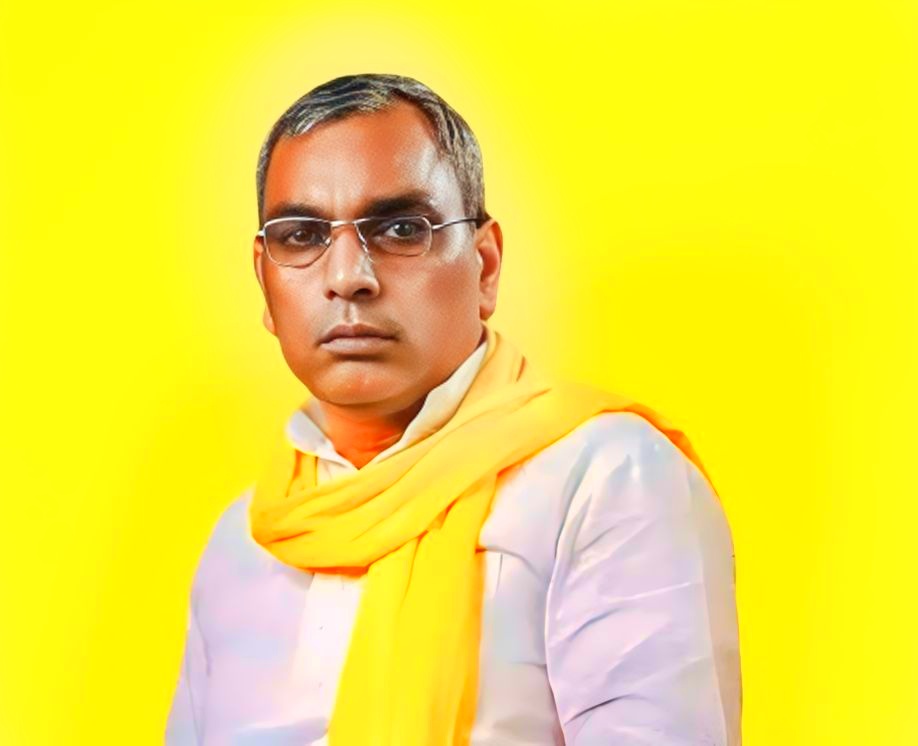
As the second phase of polling in the Bihar assembly election draws near, political tensions have escalated following a statement by Uttar Pradesh Panchayati Raj Minister Om Prakash Rajbhar. Rajbhar, president of the Suheldev Bhartiya Samaj Party and an ally of the National Democratic Alliance, sparked a political storm by claiming that the high voter turnout seen in the first phase could signal the potential for a government led by the Rashtriya Janata Dal -led Grand Alliance.
Rajbhar’s assertion, made on Monday, has become a topic of intense discussion and debate, stirring the political landscape as the stakes grow higher in the ongoing elections. His comments came a day before the second phase of voting, and though his remarks were intended to highlight the significance of voter engagement, they have been interpreted by many as a veiled suggestion that the NDA’s grip on power in Bihar might be weakening.
The first phase of the Bihar assembly election witnessed a substantial voter turnout, an indication of a heightened sense of political awareness and engagement among the electorate. According to the Election Commission, the turnout was one of the highest in the state’s history, prompting various analysts to speculate on its possible implications for the overall outcome.
Rajbhar, in his statement, emphasised that high voter turnout traditionally favours opposition parties, especially in regions where the ruling government has lost favour with the electorate. His comments came at a time when the opposition Grand Alliance, led by the RJD, had been claiming a surge in support, even as the NDA continued its campaign. The remark caught the attention of both the political establishment and the electorate, with many wondering whether Rajbhar’s words were a tactical move or a genuine expression of political sentiment.
While some political observers have dismissed Rajbhar’s statement as an attempt to distance himself from the NDA ahead of potential future power shifts, others see it as an indicator of shifting alliances and evolving political equations in the state. As the SBSP’s position in the NDA has been precarious in recent months, Rajbhar’s statement has led to further questions about the long-term stability of the alliance. His comments also cast a spotlight on the broader dynamics of the Bihar election, which have been characterised by intense competition and an unpredictable political landscape.
The NDA, led by Chief Minister Nitish Kumar’s Janata Dal and including the Bharatiya Janata Party, has been engaged in a tight race with the RJD-led Grand Alliance, which also comprises the Congress party and several smaller regional players. As both coalitions prepare for the second phase of voting, all eyes are on how the electorate’s enthusiasm and high voter turnout will impact the final results.
Political experts are now analysing Rajbhar’s statement as a strategic move. By highlighting the high turnout, Rajbhar may be trying to signal that the opposition is gaining momentum, thus positioning himself in anticipation of future shifts in Bihar’s political dynamics. His claim that the RJD-led alliance could emerge victorious has stoked concerns among NDA leaders, who are working to solidify their hold over crucial constituencies in the state.
However, others have raised doubts about Rajbhar’s true intentions, suggesting that his comments might have been intended to test the waters, rather than forecast a definitive shift in the state’s political trajectory. As a key ally of the NDA, his remarks could be seen as a response to internal pressures and growing discontent with the current coalition government.
The RJD has yet to officially respond to Rajbhar’s statement, though party leaders have seized the opportunity to reiterate their belief in a strong performance during the election. The opposition’s narrative continues to centre around the idea that the people of Bihar are dissatisfied with the NDA’s governance, and they are calling for change in the state’s leadership. As such, high voter turnout could be viewed as a positive sign for the opposition, but it is still too early to predict how the votes will translate into seats in the assembly.
In the lead-up to the second phase of polling, the attention is now squarely on how the electorate will respond to the growing rhetoric from both sides. Bihar’s political scene has long been shaped by complex caste dynamics, shifting alliances, and a battle for the rural vote, making it one of the most closely watched elections in the country. With just a short time remaining before the votes are cast, the stakes have never been higher.
 First Image of Suspected Suicide Bomber Emerges in Delhi Blast Case