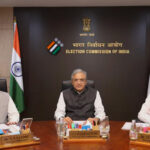
RJD leader and the INDIA bloc’s chief ministerial candidate, Tejashwi Yadav, has raised serious concerns over the Election Commission of India’s delay in releasing gender-wise data of electors for the first phase of the Bihar Assembly elections. At a press conference held in Patna on Monday, Yadav expressed his dissatisfaction, pointing out that such data had always been made available promptly after previous elections. However, this time, the ECI had failed to disclose this crucial information, even four days after the voting on November 6.
Yadav, who is a prominent figure in the opposition alliance, stated that the lack of transparency in sharing the gender-specific voting data was unprecedented. “This is the first time that the Election Commission has withheld such data, which has always been disclosed immediately after polling in the past. It is concerning that despite the passage of several days, this important information has not been made public,” he said. His remarks added weight to the growing suspicion surrounding the election process and the ECI’s handling of the proceedings.
The gender-wise voter data is considered significant as it offers insights into voter turnout among different demographics, including women, and can influence how political parties strategise in future phases of the election. Typically, political leaders and analysts rely on this data to gauge the level of participation and determine the areas where mobilisation efforts need to be intensified.
The ECI, which has long been seen as a pillar of electoral transparency, has not yet provided a clear explanation for the delay. Political observers are now questioning whether the delay is intentional or a result of procedural inefficiencies. The timing of Yadav’s criticism is significant as it coincides with a crucial phase of the election campaign, where parties are intensively competing for the attention and trust of voters. It remains unclear whether this is a minor glitch in the electoral process or something more systematic.
Yadav, known for his outspokenness and leadership within the opposition, has been vocal in his critiques of the current state government and its electoral practices. He claimed that such delays were indicative of deeper issues within the electoral framework, further eroding public confidence. “The Election Commission must uphold its duty of transparency, especially in a state like Bihar, where elections are closely watched by millions,” he added.
Political analysts have noted that while gender-wise voting data is not always the most immediate point of focus for the general public, its absence could have a lasting impact on the perception of the election’s fairness. For opposition parties like the RJD, such data could provide a critical advantage in terms of voter analysis and addressing any gaps in their outreach strategies.
The delay comes at a time when Bihar’s Assembly elections are seeing significant competition between the ruling NDA and the opposition INDIA alliance. The first phase of polling, which took place on November 6, covered several constituencies, with voter turnout being a focal point for both political camps. Yadav’s allegations have put the spotlight on the ECI’s actions, with his remarks likely to fuel further political debate over the commission’s handling of the electoral process.
Despite Yadav’s criticism, the ECI has remained silent on the matter, and no official response has been issued so far. The commission has consistently emphasised its commitment to ensuring free and fair elections. However, as the political heat in Bihar rises, such concerns could potentially undermine its credibility, particularly in the eyes of the opposition, which is already wary of perceived biases in the system.