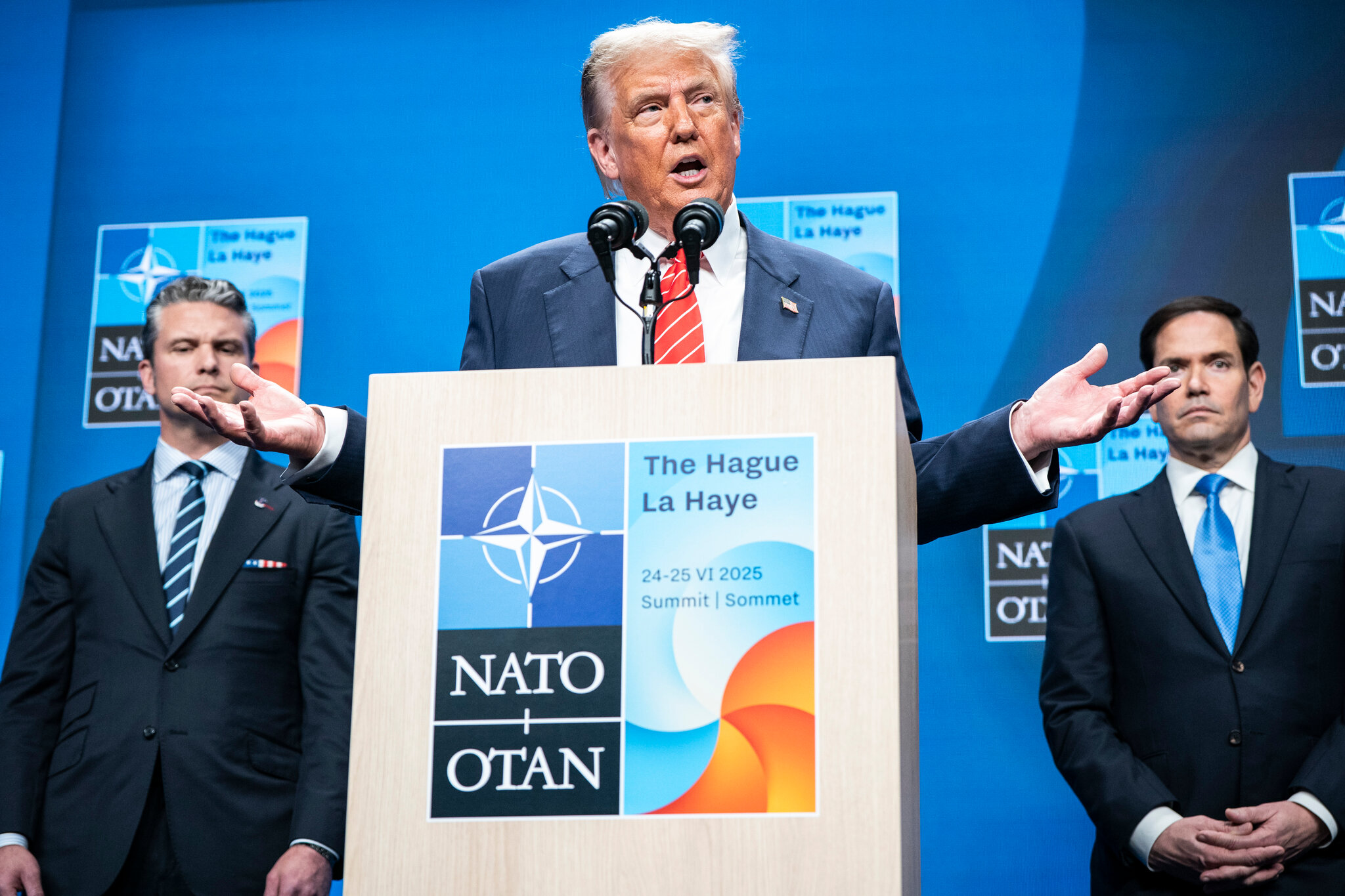
US President Donald Trump disclosed at a White House event on 26 June that, following the signing of a trade deal with China, he is now turning attention to a “very big” agreement with India. Speaking in the East Room during a ceremony promoting a government spending bill, Trump said: “We just signed [a trade deal] with China. We’re not going to make deals with everybody… But we’re having some great deals. We have one coming up, maybe with India — a very big one.”
Trump’s remarks were deliberately vague on specifics, but he emphasised that the US will selectively pursue deals: “Some we are just going to send them a letter… you are to pay 25, 35, 45 per cent,” he added, underscoring the administration’s dual strategy of targeted agreements and punitive tariffs elsewhere.
This statement follows the White House’s formal announcement that a trade agreement with China has been signed. While details remain under wraps, U.S. officials suggest the primary focus involves the supply of rare earth metals, a critical component for high-tech manufacturing and defence applications.
Parallel to Trump’s hint, early-stage India–US talks are underway in Washington. A delegation led by Commerce Minister Piyush Goyal is reportedly meeting U.S. counterparts to navigate impasses around tariffs on agricultural goods, steel, auto parts and non-tariff barriers. Negotiations have intensified ahead of a self-imposed July 9 deadline, by which Trump threatened to impose reciprocal 26% tariffs on Indian exports.
Indian officials insist any eventual agreement must ensure fairness and balance. As one Indian government representative stated, “We are keen, but not desperate… India is not for any win‑lose trade partnership,” highlighting New Delhi’s desire for reciprocal concessions on key sectors. This position echoes Commerce Minister Goyal’s public comments during a press briefing on 10 June, where he reiterated India’s demand for an equitable framework that protects domestic interests.
U.S. Commerce Secretary Howard Lutnick has expressed optimism in bilateral forums. Speaking at the US‑India Strategic Partnership Forum earlier this month, he noted that both sides had “found a place that really works for both countries” and that an agreement could be finalised “in the not‑too‑distant future.”
Despite the upbeat language, substantive hurdles remain. Reuters reports India is pressing for a rollback of the proposed 26% tariff, alongside US concessions on existing duties for steel and auto parts. Meanwhile, Washington seeks deeper tariff cuts in Indian agriculture, automobiles, alcohol and greater market access for US products.
A separate sticking point involves non-tariff barriers and regulatory obstacles. Indian negotiators reportedly want guarantees that any deal will not expose Indian farmers to U.S. genetically modified crops or lead to the offloading of cheap American products that could destabilise sensitive domestic industries.
These tensions underline the broader context: both countries view the deal as part of a strategic economic shift. India is actively pursuing trade diversification, including talks with the EU and a concluded agreement with the UK, aiming to cushion its export base against U.S. policy volatility.
Domestically in the U.S., Trump’s tariff timeline is now under scrutiny. Press Secretary Karoline Leavitt downplayed the July 9 deadline, suggesting the administration could impose tariffs unilaterally if talks falter, even without agreed reciprocity. U.S. steel and semiconductor sectors are already being readied for fresh trade curbs.
Market sentiment remains cautious. Analysts note that although more than a dozen trade talks are ongoing, only one new deal has been concluded so far. The truce with China, extended into August, and the rumoured pact with India offer some hope, but many observers remain sceptical about Trump’s compressed 90‑day timeline for securing multiple trade pacts.
Key implications of a possible India‑US deal include enhanced access to U.S. defence procurement, increased supply‑chain integration in critical sectors such as pharmaceuticals, electronics and agri‑growth, and a potential signal to U.S. firms that India is a safe haven for investment beyond China. During February’s Modi–Trump summit in Washington, both leaders agreed on an ambition to raise bilateral trade to $500 billion by 2030 — a goal that heavily depends on removing tariff and non‑tariff constraints.
India’s outreach to the U.S. has featured specific concessions — from lowering tariffs on motorcycles and whiskey to exploring a “zero‑for‑zero” tariff proposal on auto parts — all intended to smooth reciprocal arrangements. However, New Delhi remains firm on safeguards against unpredictable U.S. tariff actions after an agreement is reached.
As both sides pursue a pathway to resolution, global observers are attentive to the interplay of geopolitics and economics. A definitive U.S.‑India trade deal would mark a pivot in global supply‑chain architecture, potentially accelerating the decoupling of critical industries from China.
Yet even if Trump’s hint proves prescient, the final shape of any agreement—and whether it is signed before or after July 9—will likely be determined by how Ottawa and New Delhi balance American urgency with India’s demand for structural safeguards.