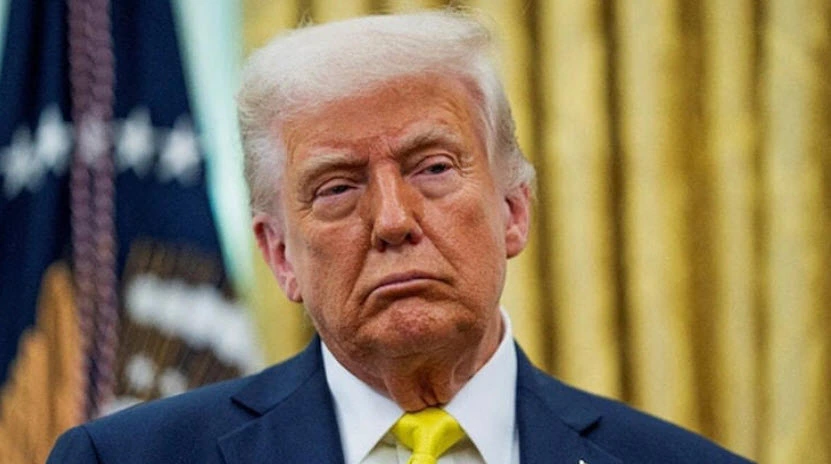
President Donald Trump has ordered CNN, MS NOW and Politico barred from the White House with immediate effect, accusing the three organisations of repeatedly publishing what he called “fake news”.
Trump announced the move on Truth Social on Friday, September 18, saying the outlets should not be allowed to “constantly write or report FICTION and LIES” about him, his administration or the United States. He said other organisations could face similar treatment but did not identify any specific report by the three outlets that triggered the decision.
Speaking later to reporters, Trump said the prohibition would be broad and described it as a “very simple ban”. The White House had not publicly issued detailed implementation rules by Friday evening, and journalists from at least some of the affected organisations remained on the grounds after the announcement, leaving uncertainty over how quickly the restriction would be enforced.
CNN said it stood behind its White House team and argued that its journalists had a constitutional right to report without government interference. Politico said it would continue covering the administration and would defend its First Amendment rights. MS NOW did not immediately issue a detailed public response.
The White House Correspondents’ Association also objected. Its president, Jacqui Heinrich, said freedom of the press does not depend on whether a president approves of an organisation’s coverage or the questions its journalists ask. The association represents journalists who routinely cover the presidency and has criticised earlier changes to White House press access.
Legal specialists and press-freedom organisations said the measure could face a court challenge. Bruce D. Brown, president of the Reporters Committee for Freedom of the Press, said excluding journalists because of their reporting would amount to viewpoint discrimination once the White House has opened press access to other news organisations. The Committee to Protect Journalists likewise said the order raised First Amendment concerns.
The immediate scope of the ban remained unclear. Trump said he did not want the targeted organisations in his office or at the White House and indicated the restrictions should extend as far as possible. He also criticised The New York Times and The Washington Post and suggested that additional organisations could be added later.
The dispute revives questions that have previously reached federal courts over whether the White House may withdraw access from individual journalists or organisations. During Trump’s first term, the administration suspended the credential of CNN correspondent Jim Acosta after a contentious press conference. A federal judge later ordered the pass restored while the case proceeded, citing due-process concerns, and the White House subsequently reinstated it permanently.
A separate fight over access developed during Trump’s second term after the White House restricted the Associated Press from some presidential events following the organisation’s decision to continue using “Gulf of Mexico” while also noting Trump’s preferred “Gulf of America”. Litigation over those restrictions produced rulings examining the government’s authority to control access to limited presidential spaces while avoiding viewpoint discrimination.
Trump has also altered the mechanics of presidential press coverage by taking greater White House control over membership of the rotating press pool that follows the president into locations too small for the full press corps. The Correspondents’ Association had traditionally organised much of that pool system.
The latest announcement goes further by naming entire organisations rather than individual reporters or limiting access to particular events. Whether the ban ultimately covers press workspaces, briefings, the grounds, Oval Office events, travel pools or all White House facilities had not been fully specified publicly when the announcement was made.
Trump defended the decision as a response to what he described as persistently negative and false coverage. The targeted organisations rejected the premise that critical reporting permits government exclusion, setting up a dispute likely to turn on the practical terms of the ban and the constitutional rules governing press access to government-controlled spaces.