


By T N Ashok
Now, the central story is not simply that N. Chandrasekaran has been given another five years. It is that the Tata Group has moved, within barely five weeks, from an apparently settled succession process to a boardroom reversal that could reshape the balance of power between Tata Sons and the Tata Trusts.
T. V. Narendran, CEO and MD of Tata Steel, was widely reported as the leading internal contender after Chandrasekaran’s August announcement. Noel Tata became vice-chairman of Tata Steel in 2022, and reports cited their close working relationship as one reason Narendran was seen as a strong candidate. Other names reported included Praveer Sinha, Shailesh Chandra, Ramakrishnan Mukundan and Neville Tata. All MDs of sister companies of the TATAs. Why Tata Sons chose continuity over succession in a year of extraordinary uncertainty. For barely five weeks, it appeared that one of India’s most powerful corporate successions had been decided.
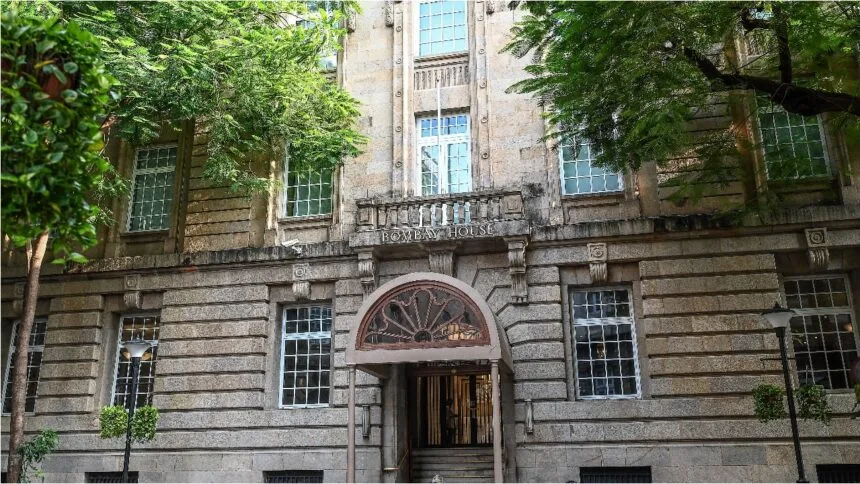
N. Chandrasekaran, the chairman who had occupied the top floor of Tata’s Bombay House since February 2017, had told the Tata Sons board on August 12 that he would not seek another term when his tenure ended on February 20, 2027. The announcement immediately opened the succession race at India’s 158-year-old conglomerate. Now that succession has been abruptly put back on hold.
On September 17, the Tata Sons board voted to reappoint Chandrasekaran for another five years. The board said its Nomination and Remuneration Committee had asked him on September 3 to reconsider his decision, citing his contribution and the larger interests of the group. Chandrasekaran agreed to reconsider and, at the September 17 meeting, accepted the board’s request. The board subsequently approved his reappointment by majority vote.
But the reversal has produced something potentially more consequential than the extension itself: an open institutional confrontation with Tata Trusts.
Noel Tata, chairman of Tata Trusts and a nominee director on Tata Sons, voted against the resolution. Tata Trusts, which collectively control about 66% of Tata Sons, has declared the reappointment a legal nullity and maintains that Chandrasekaran’s August decision was final. The Tata board has therefore solved one problem — succession uncertainty — while potentially creating another: who ultimately has the authority to determine the leadership of Tata Sons?
Chandrasekaran’s decision not to seek a third term had surprised the business establishment. He had been appointed chairman in 2017 after the dramatic removal of Cyrus Mistry and was reappointed for a second five-year term in 2022. Under his stewardship, Tata expanded aggressively into aviation, electronics, semiconductors, digital businesses and other new areas, while the group’s listed companies collectively increased substantially in market value. Reuters reports Tata Group market capitalisation rising from about $76 billion in 2017 to roughly $277 billion in 2026.
But the second half of his tenure also brought increasingly complicated questions. There were disagreements over the future of Tata Sons, capital allocation to newer businesses and the strategy for loss-making ventures such as Air India. The RBI’s regulatory classification of Tata Sons added another layer of pressure.
And behind these issues was a larger question: how should a charitable trust-controlled conglomerate be governed when the economic interests of the group have become vastly larger and more complicated than they were a generation ago? When Chandrasekaran announced his departure, Tata Trusts accepted the decision and began considering a succession process.
Names quickly circulated. T. V. Narendran, Tata Steel’s CEO and managing director, emerged as the most frequently mentioned internal candidate. Reports also identified Praveer Sinha of Tata Power, Shailesh Chandra of Tata Motors Passenger Vehicles, Ramakrishnan Mukundan of Tata Chemicals and Neville Tata among names being discussed. Narendran appeared particularly prominent in the early speculation. He had decades of Tata experience and had worked closely with Noel Tata after Noel became vice-chairman of Tata Steel in 2022.
Yet it is important not to convert those reports into an official shortlist. Tata Sons did not publicly announce that five candidates had formally competed for the chairmanship, nor did it announce Narendran as the chosen successor. The reported names represented an emerging succession conversation rather than a completed corporate selection process. The most obvious explanation is continuity. The environment facing Tata Sons today is radically different from the environment in which Chandrasekaran began his first term.
Air India remains a huge turnaround project. Tata Sons disclosed in July that restoring Air India fully could take as long as a decade. The airline recorded a net loss of ₹222.38 billion for the financial year ended March 2026, according to Reuters.
Jaguar Land Rover, based out of London, is confronting its own severe challenges. Tata is simultaneously investing in semiconductors, electronics, batteries, digital businesses, aviation and manufacturing — areas in which enormous capital commitments must be made years before returns become visible.
And now there is a regulatory issue that could fundamentally change Tata Sons itself. The Reserve Bank of India has classified Tata Sons as an upper-layer NBFC. Tata Sons sought to surrender its relevant registration, but the RBI rejected the move. That leaves the company facing the regulatory requirement for listing. The board has now indicated that it will move toward listing rather than challenge the RBI decision.
A new chairman would therefore inherit Air India’s turnaround, JLR’s difficulties, the semiconductor strategy, the Tata Sons listing question, relations with Tata Trusts and the broader restructuring of the conglomerate — all simultaneously. The board may have concluded that this was precisely the wrong moment to introduce another variable. That is an inference, however, rather than an officially stated reason. Tata Sons has said that Chandrasekaran agreed to reconsider following the board’s request and that his continuation was in the larger interests of the group. It has not publicly said that geopolitical uncertainty, artificial intelligence or the US sanctions legislation was the reason for the decision.
There is also a technological dimension. Tata is no longer merely a collection of traditional industrial companies. TCS is one of the world’s largest IT-services companies; Tata Electronics is building capabilities in semiconductor manufacturing; Tata Digital operates in consumer technology; and artificial intelligence is beginning to reshape the economics of software, business-process outsourcing and corporate services.
For Tata, AI presents both an enormous opportunity and a strategic threat. The old Tata formula — steel, automobiles, hotels, chemicals and engineering — is being supplemented by data, chips, cloud computing, digital platforms and AI. Continuity at the top could therefore have considerable strategic value as Tata attempts to decide how much capital should be committed to these new technologies and how quickly.
The timing is striking. The BRICS summit in New Delhi has just brought India into intense diplomatic engagement with Russia and China. Prime Minister Narendra Modi met both Vladimir Putin and Xi Jinping on the margins of the summit, while the BRICS declaration called for greater cooperation in energy, AI, financial systems, technology and other areas.
Almost simultaneously, the US House of Representatives passed the Lindsey O. Graham Sanctioning Russia and Iran Act of 2026 by 262-159. The legislation would give the US president authority to impose tariffs of up to 100% on countries continuing to purchase Russian energy, potentially including India and China. It has been sent to President Donald Trump for consideration.
For a group with enormous global supply chains and interests across technology, automobiles, aviation, energy and manufacturing, such geopolitical uncertainty matters. But again, there is no public evidence that the Tata board explicitly cited the BRICS summit or the Graham legislation when deciding Chandrasekaran’s future. The significance is contextual rather than causal. The Tata board is making its decision at a moment when India’s largest corporate groups face an unusually volatile combination of technology disruption, protectionism, sanctions, supply-chain realignment, energy insecurity and geopolitical fragmentation.
That brings the story back to the heart of the matter. The most consequential part of Thursday’s decision may not be Chandrasekaran’s five-year extension at all. It may be the question of whether Tata Sons’ board can reappoint a chairman against the opposition of the chairman of Tata Trusts, which controls approximately two-thirds of Tata Sons.
Noel Tata has argued that Chandrasekaran’s August decision was freely made, communicated clearly and accepted by the Trusts. Tata Trusts says a succession process should therefore proceed. The Trusts have also argued that Tata Sons’ Articles of Association require the necessary support of Trust-nominated directors for a chairman’s appointment. Noel Tata reportedly presented a legal opinion from former Chief Justice of India D.Y. Chandrachud supporting the Trusts’ interpretation.
Tata Sons takes a different position: its board’s Nomination and Remuneration Committee asked Chandrasekaran to reconsider, he agreed, and the board then voted. That disagreement is now likely to move beyond the boardroom. The annual general meeting, which must ultimately deal with the relevant corporate decisions, becomes critical because Tata Trusts holds 66% of Tata Sons. Venu Srinivasan, another Trust nominee, supported the board’s decisions, illustrating that the Trust side itself is not necessarily monolithic.
Chandrasekaran’s reappointment may therefore be read in two completely different ways. From one perspective, it is a vote for stability. The board knows the man, his strengths and weaknesses, his understanding of Tata’s sprawling businesses and his relationships with global partners. Replacing him now would mean simultaneously managing a leadership transition and some of the most difficult strategic decisions in Tata’s recent history.
From another perspective, it is a governance confrontation. The Trusts say the succession process had already begun. The board has effectively reopened a decision that the Trusts regarded as settled. That means Chandrasekaran’s third term could begin in February 2027 not with a clean mandate but amid a dispute over the very authority under which he was reappointed. And that may ultimately prove to be the bigger story. The Tata Group has survived wars, nationalisation, economic liberalisation, the Mistry crisis and repeated changes in India’s corporate landscape. Its greatest asset has traditionally been institutional credibility.
The decision to keep Chandrasekaran gives Tata continuity at precisely the moment when continuity has value. But continuity will work only if the group’s two centres of authority — Tata Sons, the operating holding company, and Tata Trusts, its controlling shareholder — can eventually agree on who exercises that authority.
The irony is difficult to miss. A month ago, the question was who would succeed Chandrasekaran? Today, the more fundamental question is: Who has the final word on the future of Tata Sons? That question will determine whether Chandrasekaran’s five-year extension becomes the beginning of a new period of stability — or the opening chapter of another prolonged Tata governance battle. (IPA Service)


