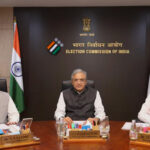
Pathak shared a platform in Lucknow on August 22 with Harsh Dubey, Mrityunjay Pathak and Shiva Sharma, activists associated with a mobilisation that has challenged the existing reservation framework. He assured the delegation that its demands would be placed before the BJP’s central leadership and said a meeting with a Union minister would be arranged within two days.
His subsequent post on X described Dubey as leading a “reservation reform” movement and said the concerns raised by the delegation would be presented effectively to the central leadership. The terminology immediately drew opposition scrutiny because the activists had emerged from demonstrations opposing caste-based quotas and advocating a substantially different system.
Hundreds of protesters had gathered at Jantar Mantar in New Delhi on August 21 under the banner Reservation Hatao Andolan. Participants demanded greater reliance on economic criteria for affirmative action, stronger restrictions on repeat benefits and wider application of a creamy-layer principle. Placards and slogans included calls for reservations to benefit economically poor people rather than operate primarily through caste categories.
Delhi Police had not permitted the demonstration at Jantar Mantar and offered Ramlila Maidan as an alternative venue for a limited gathering. Protesters refused to shift. More than 50 people were detained after sections of the crowd remained at the site beyond the permitted protest hours. Further anti-reservation gatherings and detentions were reported in the capital over the weekend, keeping the issue politically active.
Pathak did not announce support for abolishing constitutional reservations. He said the students’ demands had been heard and described dialogue as the route for addressing their concerns. But appearing with the campaigners and promising access to the BJP’s central leadership gave opposition parties an opening to question the ruling party’s position.
Samajwadi Party president Akhilesh Yadav accused the BJP and its associates of using expressions such as “review” and “reform” to weaken reservation rights. He said reservation remained a right of the PDA — the party’s formulation encompassing backward classes, Dalits and minorities — and declared that the system “was there, is there and will remain”.
Bahujan Samaj Party president Mayawati also intervened, rejecting demands to replace caste-based reservation with a predominantly economic framework. She argued that constitutional safeguards for Scheduled Castes, Scheduled Tribes and Other Backward Classes were designed to address entrenched social discrimination and historical deprivation rather than poverty alone.
The controversy creates an unusual balancing problem for the BJP. Its electoral strength in Uttar Pradesh has depended on combining substantial upper-caste support with non-Yadav OBC groups and sections of the Dalit electorate. An overt move against caste-based reservation could threaten that coalition, while dismissing demands for reform risks alienating sections of upper-caste youth who argue that the existing system disadvantages them in education and public employment.
Prime Minister Narendra Modi has repeatedly maintained that reservations for SCs, STs and OBCs will not be abolished and has portrayed constitutional protections as secure under the BJP-led government. That established position makes any suggestion that senior party figures are receptive to dismantling caste quotas particularly sensitive.
The timing further raises the stakes. The current Uttar Pradesh Assembly’s term runs until May 22, 2027, with elections expected before then. Caste representation, social justice, OBC enumeration and access to government opportunities are already developing into major campaign themes.
The BJP is simultaneously intensifying outreach among influential OBC communities, while allies are pressing their own quota demands. State minister and NISHAD Party president Sanjay Nishad has stepped up pressure for reservation benefits for the Nishad community, illustrating the difficulty of reconciling demands from groups seeking greater affirmative-action protection with those campaigning to restrict caste-based quotas.