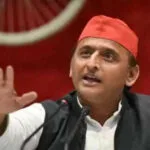
Khurshid, a former external affairs minister and head of the Congress Foreign Affairs Department, said the declaration appeared comprehensive and reflected acceptance across the expanded grouping. His assessment marked a notable shift in tone after he had earlier urged the government to rebuild confidence among Global South partners and ensure that India’s BRICS presidency delivered substantive outcomes.
The remarks came three days after senior Congress leader P Chidambaram questioned what tangible benefits India had gained from BRICS and other major international groupings. Chidambaram said he had not seen significant results from the previous two or three BRICS summits, prompting a political debate over the value of the forum.
Congress MP Shashi Tharoor had already pushed back against that criticism, arguing that hosting BRICS demonstrated India’s diplomatic convening power and gave New Delhi an important platform among leading countries of the Global South. He said the ability to bring together states with divergent interests carried value even when immediate, measurable gains were difficult to identify.
Khurshid’s comments after the summit placed emphasis on the joint declaration and the ability of members to reach agreement despite conflicts and political tensions that had complicated negotiations. The 18th BRICS Summit, held in New Delhi on September 12 and 13, brought together leaders of the expanded bloc at a time of conflict in West Asia, continuing war in Ukraine and strains over trade, sanctions and the international financial system.
The New Delhi Declaration called for de-escalation in conflict zones, opposed unilateral economic measures and backed reform of global institutions, including the United Nations. It also supported greater cooperation in trade, finance, health, food and energy security, climate action, artificial intelligence and cross-border payment systems.
Khurshid said reaching consensus itself deserved recognition because member governments had approached the summit with different priorities and sensitivities. He welcomed the final text as a product of negotiation rather than uniformity, indicating that the declaration showed the grouping could still accommodate competing positions. His praise was directed at the diplomatic process that produced an agreed document, rather than an endorsement of every aspect of the government’s foreign policy or a withdrawal of Congress’s earlier concerns.
Prime Minister Narendra Modi used the summit to argue for a stronger voice for the Global South and faster reform of multilateral bodies. He said geopolitical tensions, supply-chain disruptions, climate pressures and the weaponisation of technology and critical resources were creating risks that crossed national borders.
Consensus was especially significant because BRICS members include countries with sharply different strategic alignments and security concerns. Iran, the United Arab Emirates and Saudi Arabia entered the summit amid heightened regional tensions, while Russia and China continued to press for a more multipolar global order. India sought to keep the grouping focused on practical cooperation without allowing it to harden into an explicitly anti-Western bloc.
Khurshid had taken a more guarded position before the leaders’ meeting. He said Chidambaram’s criticism should be treated as a “word of caution” and argued that India needed to lead from the front, reduce contradictions inside BRICS and help produce outcomes that could command wider confidence.
He also said the Opposition should have been consulted because the country’s BRICS presidency represented more than the government of the day. Khurshid described the grouping as a bridge between the Global North and Global South and said its growing economic and demographic weight made it impossible to dismiss.
A Congress statement issued as the summit opened had welcomed the expanding significance of BRICS while pressing the government to strengthen India’s diplomatic standing, deepen South-South cooperation and pursue more balanced trade with member countries. It also sought greater clarity on the summit’s practical outcomes.