By Nitya Chakraborty
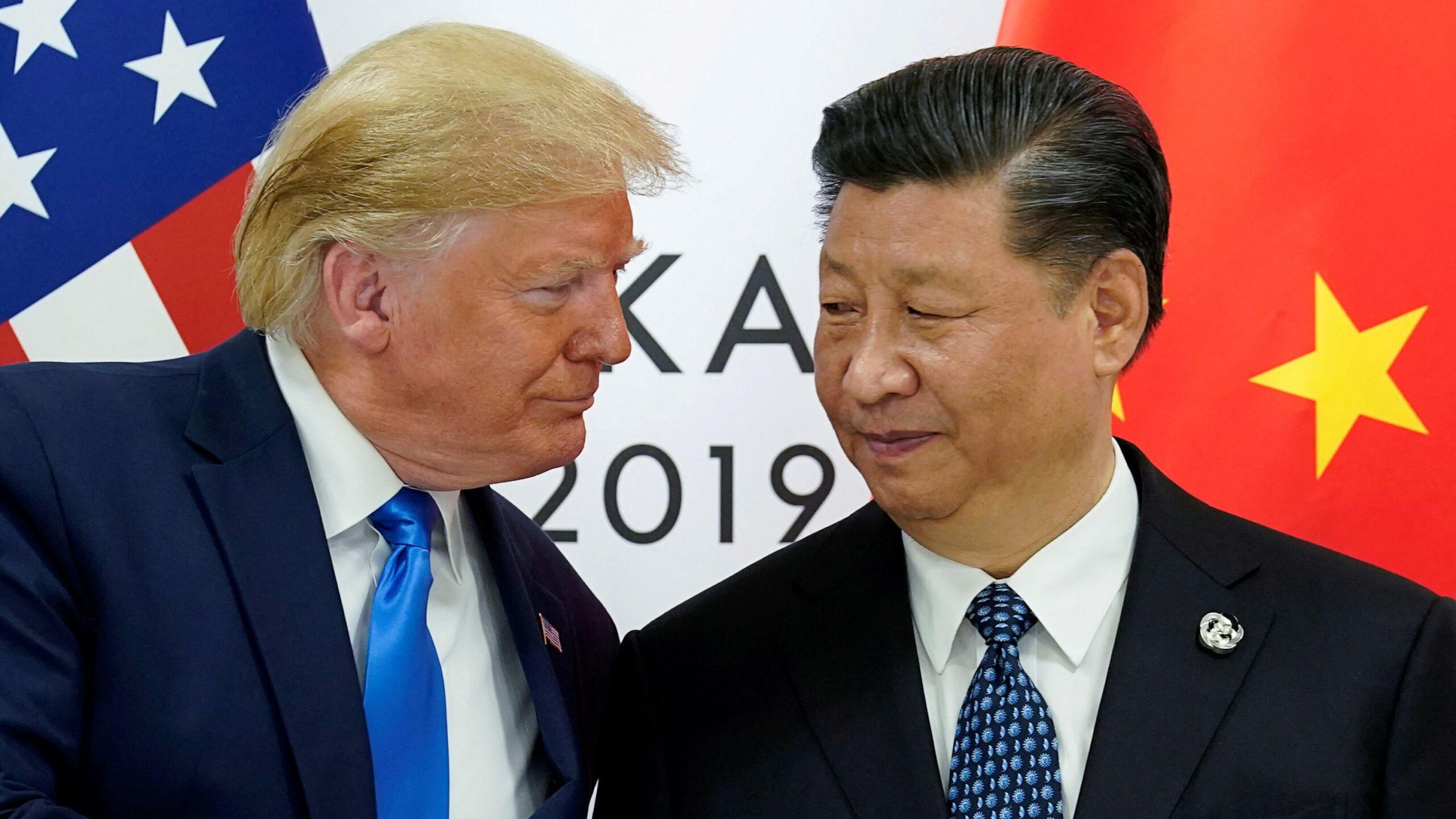
2025 has been a golden year for the Chinese President Xi Jinping in global diplomacy. In the last ten months since taking over the U.S. presidency by Donald Trump on January 20 this year for the second non-consecutive term, Chinese supremo Xi Jinping is on the roll. At the Busan summit in October this year, Trump virtually gave Xi the equal status by calling the meeting G2. But in the next four weeks, Chinese muscle power in diplomacy vis a vis Trump was more visible during last Monday November 24’s 45 minute conversations where all through XI had the dominant voice and Trump only reacting.
This telephonic conversation was sudden. There was no inkling from the White House about such a possibility before. Who took the initiative first? The Chinese official media claimed immediately after the summit that Trump took the initiative while the Trump’s office gave this who first issue no importance by saying that the communication between the two leaders are most important and that took place successfully.
What exactly was discussed during the telephonic talks spanning 45 minutes? If the Chinese official media is to be believed, it was mostly Taiwan and the follow up of Busan consensus including the few measures on US-China trade deal which is expected to be concluded during the coming visit of Trump to China in April this year. Interestingly, Trump advisers as also Trump himself did not give importance to the Taiwan issue during the briefing in social media. The US President as usual was highly optimistic about his meeting with President Xi in China in April 2026 and President Xi’s visit to USA by the end of 2026. The next G20 meeting is scheduled in Florida in November 2026. So Trump must have hinted that President Xi will be attending that and they will have one on one meeting then. In fact, there is a possibility that after G20 meeting, President Xi may be on a state visit to USA.
Already, throughout US, Europe and Asia-Pacific, extensive discussions are taking place on the import of the Trump-Xi’s talks on the future of Taiwan and the security situation in Asia-Pacific, especially involving Japan. Japan’s new Prime Minister Sanao Takaichi is a diehard anti-China. Last week, Takaichi said that if China blockades Taiwan or seizes it, Japan will treat it as direct threat to its security. She also mentioned the US-Japan pact for mutual security. This was a major point during Xi’s talks with Trump and it was evident Xi wanted Trump to restrain Takaichi. That the impact was immediate and Trump took Xi’s objections seriously, was evident from the fact that on Tuesday Trump called Takaichi and had discussions on her comments about Taiwan. Though the White House did not comment on this telephonic discussions with Japanese PM, seasoned diplomats felt that Trump must have asked Takaichi not to make provocative comments which may cause problems in the process of improvement of US-China relations.
So why is Trump giving such a long rope to the Chinese President Xi Jinping, even on issues concerning Asia-Pacific? The plain answer is Trump wants desperately to conclude US-China trade pact during his April visit and during this six month period, he does not want anything that hampers the conclusion of the trade pace. Trump’s anxiety is mostly related to the Chinese export of rare earth minerals. At Busan meeting, an interim arrangement was agreed to by President Xi to allow export of precious rare earth minerals to US for just one year. Trump wants to make a long term arrangement. President Xi is skillfully using this advantage in putting pressure on Trump on Taiwan issue. This does not mean that China will immediately seize Taiwan as some Taiwan leaders are apprehending. Rather, it will be in China’s long term interests to make use of Taiwan threat to extract concessions from Trump in trade matters for the next three years of Trump tenure .
Notably, President Xi is mentioning of the second world war cooperation between China and the USA against Japan in defending his position on both Taiwan and Japan. As per Global Times, the official English daily of the Chinese Government, President Xi underscored in his meeting with Trump that Taiwan’s return to China is an integral part of the post second world war international order. GT reminds that the Cairo declaration stated in clear terms that all the territories Japan has stolen from China including Taiwan and the Penghu islands, should be restored to China. The Potsdam proclamation signed by China, USA, UK and the Soviet Union reaffirmed that the Cairo declaration shall be carried out and in September 1945, Japan signed the instrument of surrender pledging to faithfully fulfill the obligations laid down by Potsdam Declaration.
It was in this context that President Xi told Trump at the Monday meeting that by crossing the red line on Taiwan issue, Takaichi is openly challenging the post war international order established on the basis of Cairo proclamation and Potsdam declaration. According to GT sources, President mentioned that some of the Japanese government ministers believe that they have got backing from the US against their anti-China rantings, this should be countered. To appease Xi, Trump rang up the Japanese PM on Tuesday and conveyed his disapproval of the latest anti- China tirade by Takaichi. President Xi must be happy now as Trump acted soon after his complaint.
By now, it is clear that the US President has no long term stake to any of the US allies Taiwan or Japan. Right now, the priority is to pep up the economy and to ensure that no US soldier dies in any war abroad. This approach is on the lines of his MAGA supporters. Taiwan and Japan must have big reasons to be worried about their respective security. They can not expect President Trump to come to their rescue by angering President Xi at the moment. So they have to behave as per Trump’s advice for the next three years of Trump regime.
What about India under Prime Minister Narendra Modi? Indian diplomacy is in a big limbo. Though, there is some improvement in India’s bilateral relations with China after Modi-Xi summit in China during SCO meet, but as regards border, there is just stalemate. There is disengagement but China is in no mood to withdraw its troops from occupied territories. Now there is a renewed Chinese claim for the India’s bordering state Arunachal as a part of China.
This is not just mere propaganda by Chinese authorities. Chinese organisations have been treating this claim officially. The detention of an Indian origin person from Arunachal at Shanghai airport and harassing her for 18 hours was a testimony of the official Chinese attitude to the Arunachal state of India. All the Chinese foreign ministry maps show Arunachal, not a part of India. This pressure on India will continue even when the bilateral relations are improving in other areas.
India has to take this issue seriously with the Chinese government. The Chinese strategy is to improve relations in other areas with India, especially in trade but give no concessions in land areas under their occupation. Now Arunachal has emerged as another irritant in India-China relations. Prime Minister Narendra Modi has to deal with the Chinese political leadership bilaterally. The American President, the great friend Narendra Modi cultivated till the April tariff war started, will pay no heed to any plea for assistance from India. Trump is ready to dump QUAD including Japan to get a great deal from China. Trump, is a 100 per cent transactionalist. He courted Pakistan because of that. India may not be that useful to him. Prime Minister Narendra Modi will have to find out his own novel ways to deal with President Xi. There is no other option. (IPA Service)