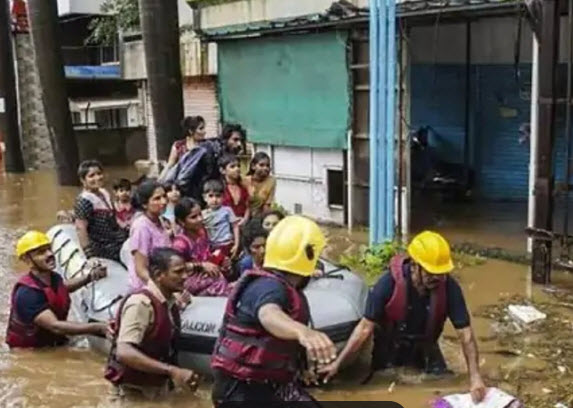
The landslide hit Gaushiya Chawl in Chirag Nagar at about 3.48 am, when a section of a hillock gave way and debris crashed onto houses below. The area lies near Kurla and falls under the jurisdiction of Ghatkopar police. Two to three houses were initially reported to have been directly affected, though separate accounts indicated that as many as six or seven shanties may have been struck.
Teams from the Mumbai Fire Brigade, Mumbai Police, National Disaster Response Force and civic authorities were deployed for an intensive search-and-rescue operation. Rescuers were using specialised victim-detection cameras to look for signs of life beneath unstable layers of mud, rock and structural debris.
The casualty figures changed as the operation progressed. Police had earlier confirmed the recovery of two bodies and said several people remained unaccounted for. The death toll was subsequently reported to have risen to five as rescuers continued working through the debris. Estimates of the number trapped also varied during the morning, ranging from three or four to as many as eight as emergency workers tried to establish how many residents had been inside the affected homes.
Local residents were among the first to begin rescue efforts after the hillside collapsed while many people were asleep. Several residents were pulled from the rubble before specialised teams expanded the operation, clearing debris while taking precautions against further movement of the rain-soaked slope.
Two injured people were taken to hospital. They were identified as 18-year-old Sohel Ansari, who suffered a head injury, and 14-year-old Mohamad Ansari, who sustained an injury to his back. Both were reported to be in stable condition.
Mumbai Mayor Ritu Tawde visited the site along with Additional Municipal Commissioner for the Eastern Suburbs Avinash Dhakne as rescue operations continued. Tawde announced financial assistance of Rs 3 lakh for the families of each person killed, with the payments to be processed through the District Collector’s Office.
Heavy rainfall preceded the collapse and has kept Mumbai and surrounding areas under heightened monsoon vigilance. Seasonal rainfall in the city has crossed 2,000 mm, while weather forecasts have warned of further heavy precipitation across parts of the Konkan region. Such conditions increase the threat of soil saturation, slope instability, waterlogging and localised flooding in vulnerable settlements.
The disaster has again highlighted the exposure of settlements built along Mumbai’s hillsides, where densely packed homes often sit beneath slopes vulnerable to failure during prolonged monsoon rain. Past landslides in the metropolis have caused heavy casualties, prompting repeated efforts to identify dangerous slopes, build retaining structures and move residents from high-risk locations.
A series of rain-linked emergencies has added to concerns over the vulnerability of homes and infrastructure during the 2026 monsoon. Six people were killed in July when a multi-storey chawl collapsed in Mankhurd during heavy rainfall, while other weather-related incidents have included tree falls and flooding across several neighbourhoods.
Emergency workers at Chirag Nagar were concentrating on areas where trapped residents were believed to be located, using cameras and other rescue equipment before removing larger sections of debris. Police personnel were also securing the site while civic teams assessed damage to nearby homes and the condition of the hillside.
(IPA Service)