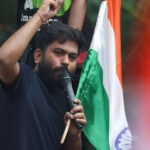
The demonstration brought together activists associated with the Cockroach Janata Party and civil society participants who questioned the Special Intensive Revision of electoral rolls and sought safeguards against wrongful deletion or exclusion of eligible voters.
Fadnavis rejected the protesters’ central contention that the revision exercise reflected systemic manipulation. He said claims being advanced against the Election Commission of India lacked substance and were being used to create public suspicion about an institution constitutionally responsible for conducting elections.
The chief minister’s intervention sharpened the political dispute over electoral-roll verification, which has become a major point of confrontation between the ruling establishment and groups challenging the manner in which voter lists are being examined.
Protesters at Shivaji Park maintained that their objections were directed at the procedures adopted during the revision and the possibility that eligible electors could face difficulties establishing their entitlement to remain on the rolls. Participants called for transparency, accessible verification mechanisms and effective opportunities to challenge exclusions.
The Election Commission has maintained that electoral-roll revision is intended to improve the accuracy of voter lists by ensuring that eligible citizens are included while removing entries that are duplicate, invalid or otherwise no longer qualify under electoral law. The commission has also stressed the availability of claims and objections procedures for electors affected by revisions.
Opponents of the SIR process have nevertheless raised questions about documentation requirements, verification standards and the practical burden placed on voters. They argue that an exercise involving large numbers of electors requires particularly strong safeguards because errors can affect the exercise of the franchise.
Supporters of the revision counter that periodic scrutiny of electoral rolls is an established administrative requirement and that inaccurate entries can themselves undermine confidence in elections. They have rejected assertions that verification automatically amounts to voter suppression, saying objections should be assessed against specific evidence and the procedures prescribed by the Election Commission.
Fadnavis’s comments came amid broader political arguments over the Election Commission’s functioning and the integrity of electoral rolls. Opposition parties and activist groups have demanded greater disclosure about additions and deletions, while governing-party leaders have accused critics of attempting to discredit the electoral system without substantiating their accusations.
The dispute has placed renewed attention on the safeguards available to voters whose names are omitted or whose eligibility is questioned. Electoral procedures provide avenues for submitting claims, correcting entries and objecting to proposed changes, while decisions taken by registration authorities remain subject to prescribed review mechanisms.
Civil society groups have argued that formal remedies alone may not be sufficient if voters lack information, documentation or easy access to officials. They have called for clearer communication, longer opportunities where necessary to resolve discrepancies and greater publication of data that would allow changes to electoral rolls to be independently examined.
The Election Commission, for its part, has repeatedly emphasised that preparation and revision of electoral rolls are conducted under constitutional and statutory provisions and that eligible voters should use the designated procedures to verify their registration and seek corrections.
Friday’s gathering also reflected the widening public dimension of the SIR controversy. What began largely as a dispute involving political parties and election authorities has increasingly drawn lawyers, campaign groups and other civic participants into arguments over voter eligibility, documentary verification and institutional accountability.
Fadnavis sought to draw a distinction between legitimate scrutiny and what he described as an organised attempt to build an unsupported narrative against the Election Commission. His remarks placed Maharashtra’s government firmly behind the commission’s authority while leaving individual complaints about electoral-roll entries to the mechanisms established under election law.