By Ashok Nilakantan Ayers
NEW YORK: It began as a routine flight from Dubai to Tel Aviv. Within minutes, passengers were screaming, a pilot was bleeding inside the cockpit and the aircraft was plunging thousands of feet toward the darkness below.17,000 feet reportedly. For those aboard Flydubai Flight FZ1073 on Wednesday, the question was brutally simple: Was the aircraft still under control — and would anyone on board survive?
The Boeing 737 MAX, carrying more than 150 passengers, including dozens of Israelis, was flying toward Israel when violence erupted inside the cockpit. According to passenger accounts and Israeli officials, one of the pilots allegedly attacked and stabbed the other and may then have attempted to take control of the aircraft and crash it.
The aircraft transmitted an emergency signal and subsequently the international transponder code 7500, indicating unlawful interference or a possible hijacking. Flight-tracking data showed a dramatic descent from roughly 33,000 feet to about 17,000 feet in a very short period. For passengers in the cabin, there was no explanation. There was only the sudden sensation of an aircraft falling.
Passengers later described hearing screams from the cockpit. When the cockpit door opened, they reportedly saw blood and an injured pilot. One passenger told Israeli media that passengers initially had no idea what was happening. Then came the realization that something had gone terribly wrong in the cockpit. Some passengers rushed forward and helped restrain the alleged attacker. Other reports say additional pilots travelling as passengers helped crew members regain control of the aircraft.
For those inside the cabin, the experience was closer to a free fall than an aviation emergency. People were praying. Some were crying. Others were attempting to understand why the aircraft appeared to be diving.
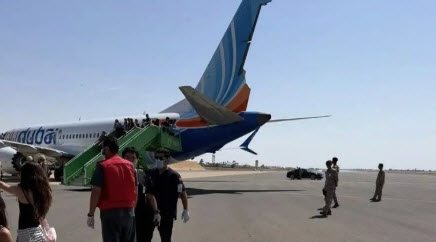
A passenger account cited by AFP said passengers believed they were going to die. Another described hearing a cry for help and seeing blood after the cockpit door opened. Then came the extraordinary part. Passengers and crew apparently succeeded in containing the person involved in the cockpit confrontation. The aircraft was eventually brought under control and diverted to Tabuk in northwestern Saudi Arabia. All passengers were reported safe. Both pilots were taken for medical treatment.
Israeli Prime Minister Benjamin Netanyahu said the incident appeared to involve one pilot stabbing the other and attempting to crash the aircraft. Israeli security officials have been treating the episode as a possible terror incident rather than simply an unexplained cockpit fight.
But investigators have not yet publicly established the motive. That distinction matters. There are several possibilities still open: an intentional attempt to seize control of the aircraft; a suicide attempt by a pilot; a violent personal confrontation that unexpectedly sent the aircraft into a dangerous descent; or an attack motivated by the nationality of the passengers or the destination. The available evidence has not yet conclusively established which explanation is correct. Even the sequence of events remains under investigation.
The aircraft reportedly transmitted the 7700 emergency code before briefly transmitting 7500, the code associated with hijacking or unlawful interference. Some reports have suggested that the signals may have been transmitted during the cockpit struggle. That uncertainty makes the incident all the more disturbing.
If investigators ultimately establish that a pilot deliberately attempted to crash a passenger aircraft carrying Israelis, the implications would extend far beyond one flight. Commercial aviation has spent decades building layers of protection against external hijacking. Cockpit doors were strengthened. Access was restricted. Crew procedures were redesigned after the September 11 attacks. But this incident raises a different vulnerability:
What happens when the threat is already inside the cockpit? ;The person entrusted with flying the aircraft would, by definition, possess the knowledge and access necessary to create an extraordinary danger.
That is why the incident could force aviation authorities to reconsider security protocols surrounding pilots, cockpit access, psychological screening, weapons, crew interaction and the monitoring of unusual behaviour before and during flights. It could also raise uncomfortable questions about international aviation on routes involving Israel.
The timing inevitably adds another layer. The Middle East remains engulfed in conflict, with Israel involved in a wider confrontation involving Iran and other regional actors. The flight was carrying Israeli passengers and was headed toward Israel.
That does not establish a connection between the cockpit incident and the regional conflict. But investigators will inevitably have to ask whether the aircraft, its passengers, its destination and the current regional environment were relevant to the attack — if an attack is ultimately established.
Was this an isolated act by an individual? Was it an attempted suicide? Was it terrorism? Or was someone deliberately trying to turn a commercial aircraft into a weapon and create a spectacular international crisis?
At this stage, there is no publicly established evidence of a wider international conspiracy behind the incident. Any suggestion of such a conspiracy remains speculation until investigators establish evidence connecting the pilot to an organisation, political objective or external direction.
Yet that possibility will inevitably form part of the security inquiry because of what was potentially at stake. A successful attack would not merely have killed passengers. It could have created a geopolitical earthquake.
The most frightening aspect of the episode may be what passengers did not know while it was unfolding. They did not know whether the descent was deliberate. They did not know whether the pilot at the controls was trying to save them or kill them. They did not know whether another attack was underway. And they did not know whether the aircraft would recover before it reached the ground.
Reports that passengers and off-duty pilots intervened make the episode extraordinary. But they also expose the thin line between an aviation emergency and catastrophe when the cockpit itself becomes the scene of violence.
The entire episode of the aircraft evoked horrible memories of 9/11 when kamikaze terrorists crashed two planes into the WTC to attract global attention to the alleged supremacy of terrorism against state resistance. The aircraft eventually landed safely in Saudi Arabia. The passengers walked away. But the investigation has only begun.
The critical evidence will now be inside the cockpit: flight-data recordings, cockpit voice recordings, communications with air-traffic control, the sequence of transponder signals, medical and forensic evidence, the pilots’ backgrounds and motives, and testimony from the passengers and crew.
Until those pieces are assembled, one fact remains beyond dispute: A flight carrying passengers toward Israel suddenly plunged into chaos at cruising altitude, one pilot was stabbed, the aircraft entered a dangerous descent, passengers and crew intervened, and a potential mass-casualty disaster was narrowly avoided.
The world will now want to know whether this was the desperate act of one individual — or the first visible fragment of something much larger. That answer could determine whether Wednesday’s drama was an extraordinary aviation emergency or a warning of a new and deeply unsettling dimension of the Middle East conflict. (IPA Service)