The two Leaders of the Opposition, representing the Lok Sabha and Rajya Sabha respectively, had sought an appointment between 4 pm and 5 pm to present a memorandum calling for the resignation of Chief Election Commissioner Gyanesh Kumar, suspension of the Special Intensive Revision (SIR) of electoral rolls and a return to paper ballots.
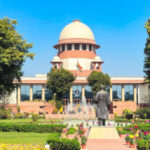
The Chief Justice’s office communicated its refusal by email on Sunday, explaining that the issues raised were before the court and could not be addressed through an administrative meeting. Surya Kant heads the Bench examining related matters, according to people familiar with the correspondence.
The response indicated that the leaders could file a petition through the judicial process on Monday, potentially allowing their concerns to be considered when the matter comes up for hearing on Tuesday. It also emphasised that citizens seeking protection of fundamental rights could approach the court through established procedures.
The distinction between judicial proceedings and administrative intervention was central to the refusal. The Chief Justice cannot issue judicial directions through a private meeting, while matters under consideration by a Bench must be handled through the court’s formal hearing process.
The decision came ahead of an Opposition march towards the Supreme Court in New Delhi, organised under the banner Chalo Delhi – March for Democracy. Congress asked participants to assemble at the Connaught Place–Barakhamba Road junction at 1.30 pm on Monday.
Gandhi appealed to Opposition parties, young people and civil society organisations to join the demonstration. He said the mobilisation would bring together people from different communities and states to defend constitutional protections and the integrity of elections.
The Congress leader accused police personnel and supporters of the Bharatiya Janata Party of attacking demonstrators during Saturday’s protests in Delhi. Those allegations have not been independently established, and responsibility for the reported confrontations remains contested.
Kharge, speaking in Bengaluru on Sunday before the refusal became public, confirmed that both leaders had written separately to the Chief Justice. He said their intention was to place their concerns before him rather than demand a particular judicial order.
The Congress president also accused Prime Minister Narendra Modi and Home Minister Amit Shah of creating conditions resembling an undeclared Emergency. He cited police deployments and detentions during demonstrations as evidence of what he described as government efforts to suppress dissent.
The government and the Election Commission have faced mounting Opposition criticism over the revision of electoral rolls. Opposition parties allege that the exercise risks excluding eligible voters and have questioned the Commission’s independence. Those accusations remain allegations rather than findings of electoral wrongdoing.
The Election Commission has maintained that its procedures have a statutory basis and that differences of opinion within the institution form part of normal deliberation. The existence of political objections does not, by itself, establish manipulation of voting records or electoral results.
The dispute has also brought renewed demands for replacing electronic voting machines with paper ballots. That proposal forms part of the Opposition memorandum, although it is separate from the legal questions surrounding the revision of electoral registers.
On Friday, representatives of several Opposition parties marched from Parliament towards Vijay Chowk before a delegation submitted a memorandum to President Droupadi Murmu. They sought her intervention over their allegations concerning the Chief Election Commissioner and electoral administration.
Security measures surrounding the demonstrations have generated another dispute. Delhi Police imposed restrictions under Section 163 of the Bharatiya Nagarik Suraksha Sanhita, while closures affecting Metro access and internet services prompted objections from protesters and lawyers.
A special Supreme Court Bench sitting on Sunday examined complaints about restrictions imposed despite an earlier judicial order. It directed that public movement, transport facilities and internet access should not be obstructed, and that lawyers should be able to reach the courts.
The Bench comprised Justices Joymalya Bagchi and V Mohana. Its directions addressed access and movement during the protests, rather than deciding the Opposition’s allegations about electoral rolls or the demand for the Chief Election Commissioner’s resignation. The court also called for barricades to be removed and railway facilities to operate normally. Those instructions concerned immediate public access during the demonstrations.