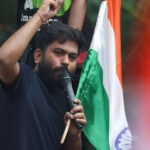
Ilyasi said he supported and agreed with Bhagwat’s remarks, delivered during a faith leaders’ gathering in New York on Saturday. He said Bhagwat had consistently spoken about unity among Muslims and followers of other faiths and described the message from the United States as potentially historic.
“I support and agree with respected Mohan Bhagwat Ji’s statement, and I believe India agrees with it,” Ilyasi said. He added that Bhagwat had previously spoken of people sharing the same DNA and said the RSS chief’s first visit to America and the message delivered there could become a milestone.
Bhagwat, addressing the “One World, One Humanity” event, said a person could not claim to be Hindu while seeking the exclusion of Muslims from the country. “If any Hindu thinks that there should be no Muslim in Bharat, he will not remain Hindu,” he said.
He also said people following different religious paths ultimately shared the same human dignity. Bhagwat argued that Hindu thought required acceptance of multiple routes to spiritual truth and said there was no fundamental difference between human beings.
Ilyasi’s endorsement added a significant Muslim clerical voice to the debate generated by Bhagwat’s comments, which drew contrasting political reactions on Sunday. Several opposition leaders welcomed the language of coexistence but questioned why, in their view, the RSS chief did not articulate the same message more forcefully within India.
AIMIM president Asaduddin Owaisi accused the RSS of maintaining different messages for international and domestic audiences. Congress and other opposition figures also challenged Bhagwat to address what they described as anti-minority rhetoric by organisations and leaders associated with the wider Sangh Parivar.
AAP’s Delhi president Saurabh Bharadwaj said Bhagwat should communicate the message on religious diversity to BJP leaders whom he accused of contributing to Hindu-Muslim polarisation. CPI general secretary D Raja similarly said the significance of the remarks would depend on whether Bhagwat repeated them on home soil.
The BJP and several leaders aligned with the RSS defended the speech as a restatement of Hinduism’s inclusive character. Maharashtra Chief Minister Devendra Fadnavis said tolerance was fundamental to Hindutva and argued that Hindu civilisation had endured because it absorbed diversity while preserving its core values.
Fadnavis said India had historically provided refuge to communities rejected elsewhere and maintained that tolerance was deeply embedded in Hindu society. He added that while attacks should be answered, a Hindu did not initiate aggression.
Bhagwat’s remarks were made during a gathering attended by members of the diaspora and interfaith representatives in New York. He also spoke about “unity in diversity”, saying diversity should be celebrated and respected rather than treated as a source of division.
The exchange has particular resonance because Ilyasi and Bhagwat have previously taken part in structured outreach between the RSS and Muslim religious leaders. The All India Imam Organisation has supported dialogue aimed at reducing distrust between communities and encouraging direct engagement between religious institutions.
At a meeting in New Delhi in July 2025 involving Muslim scholars, imams, muftis and madrasa representatives, Ilyasi said dialogue was necessary to clear misunderstandings, reduce hatred and build trust. The gathering discussed communal harmony, religious understanding and the need for sustained engagement between Hindu and Muslim representatives.
Bhagwat has also previously said that the RSS and Hindutva were not opposed to any religion and that Muslims were equal citizens. His New York formulation, however, was unusually direct in linking Hindu identity itself to acceptance of Muslims as part of the country.