
Congress leader Rahul Gandhi subsequently sought to contain the dispute by maintaining that Pawar’s party remained part of the INDIA bloc, prompting a more restrained response from Congress functionaries in Maharashtra. Neither party has formally announced its withdrawal from the Maha Vikas Aghadi (MVA).
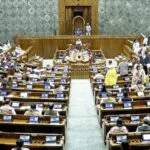
The confrontation comes ahead of Monday’s special parliamentary sitting, during which Prime Minister Narendra Modi’s government is expected to introduce revised constitutional amendment legislation linking the redistribution of parliamentary constituencies with the implementation of reservations for women.
NCP (SP) chief whip Amol Kolhe said party MPs had requested working president Supriya Sule not to participate in the Opposition meeting through video conferencing following Wadettiwar’s remarks. The party ultimately sent no representative to the deliberations in New Delhi.
Kolhe maintained that the NCP (SP) had not finalised its position on the legislation and questioned the justification for Congress leaders publicly attacking Pawar before the party had announced its parliamentary decision.
Wadettiwar, leader of the Congress legislature party in Maharashtra, accused Pawar of abandoning his longstanding commitment to progressive politics and alleged that his party prioritised access to power over ideological principles. His description of Pawar as a backstabber drew strong objections from NCP (SP) parliamentarians.
Maharashtra Congress president Harshwardhan Sapkal adopted a more conciliatory position, urging political leaders to exercise restraint in their public statements. He expressed confidence that Pawar’s party would not endorse legislation that Congress considers constitutionally objectionable.
Shiv Sena (UBT), the third constituent of the MVA, also challenged the NCP (SP) over its apparent willingness to support the government’s proposals. Rajya Sabha member Sanjay Raut argued that Pawar’s party owed its parliamentary representation partly to the electoral cooperation extended by its Opposition partners.
Raut warned against unilateral decisions on legislation affecting Maharashtra’s interests and the federal structure. He questioned whether the NCP (SP) could continue participating in Opposition deliberations while supporting a constitutional amendment opposed by its principal allies.
Conflicting statements from senior NCP (SP) figures have complicated the dispute. Party legislator and national spokesperson Jitendra Awhad announced on Friday that the organisation supported delimitation provided parliamentary representation increased uniformly by 50 per cent across states.
Sule subsequently clarified that the party would examine the legislative text before determining its position. She indicated that the definitive decision would be communicated during parliamentary proceedings, effectively qualifying Awhad’s announcement.
The revised government proposal envisages increasing the Lok Sabha’s strength from 543 to 815 seats while preserving the relative representation of states until 2051. The uniform expansion is intended to address objections that states with lower population growth could lose parliamentary influence under a population-based redistribution.
Congress president Mallikarjun Kharge chaired Saturday’s meeting, where participating Opposition parties agreed to resist the proposed amendment. They demanded that women’s reservation be implemented within the existing parliamentary strength without altering the distribution of seats among states for 25 years.
Kharge also raised concerns about parliamentary representation for Scheduled Castes and Scheduled Tribes, arguing that the proposed constitutional arrangements would not adequately reflect changes in their population.
The Dravida Munnetra Kazhagam, meanwhile, has announced support for the revised legislation, demonstrating differences among Opposition parties over whether safeguards protecting the relative parliamentary strength of states sufficiently address their concerns.
The government requires a two-thirds majority of members present and voting, alongside a majority of the total membership of each House, to secure passage of a constitutional amendment. An earlier attempt to pass related legislation failed in April.
The Bharatiya Janata Party defended Pawar against the Congress criticism. Maharashtra BJP spokesperson Navnath Ban accused Congress of disregarding Pawar’s contributions to the formation of coalition governments in the state.
BJP legislator Parag Alavani defended the proposed expansion of parliamentary constituencies, arguing that population growth had made effective representation increasingly difficult for individual elected representatives.
Parliamentary Affairs Minister Kiren Rijiju announced that the Lok Sabha would reconvene on November 30, followed by the Rajya Sabha on December 2. Proceedings could conclude on December 3, depending on legislative requirements.
The NCP (SP) has issued a whip requiring its eight Lok Sabha members to attend parliamentary proceedings from November 30 through December 4 and adhere to the party’s position. The attendance directive does not explicitly instruct members to vote in favour of the proposed constitutional amendment.