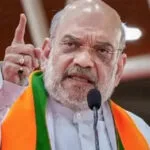
Adityanath said the Bharatiya Janata Party had submitted a memorandum to the Election Commission seeking the inclusion of eligible voters allegedly omitted during the Special Intensive Revision (SIR). He claimed the number of Muslim electors had risen by 1.65 per cent after the exercise, although publicly available electoral data do not independently establish either community-wise figure.
Speaking at a public discussion in Ayodhya, the chief minister challenged Samajwadi Party president Akhilesh Yadav to demand that the revision be withdrawn. He argued that Yadav would avoid doing so because, according to his calculations, Muslim voter numbers had increased despite the overall contraction of the electorate.
Adityanath said discrepancies had emerged when electoral rolls maintained for Assembly elections were compared with those used for panchayat polls. He questioned why people appearing on local election lists were absent from the Election Commission’s rolls and called for their eligibility to be examined.
The chief minister identified 66 lakh people allegedly listed for panchayat elections but absent from Assembly rolls. He also cited 55 lakh Hindu beneficiaries of government welfare schemes and approximately 4.5 lakh people aged 18 or 19 whose names, he said, were missing. The categories and their relationship to the overall estimate have not been independently verified.
His intervention has sharpened an unusual political confrontation. The BJP has defended the SIR as necessary to clean up voter lists, while its chief minister is simultaneously questioning omissions arising from the exercise. Opposition parties have criticised the revision over the possibility that eligible electors could lose their voting rights.
Adityanath maintained that removing ineligible entries was legitimate, including those belonging to deceased people. He cited approximately 46 lakh deceased electors and called for the exclusion of foreign infiltrators, while insisting that every qualified citizen should be able to register. Those figures and allegations were presented as his claims rather than findings independently established by election authorities.
Yadav has questioned how the chief minister obtained a religious breakdown of voter registrations when the Election Commission has not published comparable religion-wise totals. The Samajwadi Party leader has also challenged the basis of the alleged exclusions, demanding greater transparency about the data underpinning Adityanath’s assertions.
Samajwadi Party spokesperson Udaiveer Singh said the chief minister should seek action against election officials if he believed the revision had been mishandled. Singh questioned why Adityanath did not support moves against Chief Election Commissioner Gyanesh Kumar and called for scrutiny of officials responsible for the exercise in Uttar Pradesh.
The Election Commission’s aggregate figures confirm a substantial reduction in the state’s registered electorate. Uttar Pradesh had approximately 15.44 crore voters before the revision began on 27 October 2025. The final rolls published on 10 April 2026 recorded 13,39,84,792 electors, a net decline of roughly 2.04 crore.
The final total included 84.28 lakh additions during the claims and objections process. However, the overall figures cannot establish whether the people removed were predominantly from any religious community, nor whether particular names were omitted improperly. Determining eligibility requires examination of individual records rather than comparisons based solely on population or community estimates.
A separate discrepancy has emerged between Assembly and local-government voter lists. Uttar Pradesh’s Chief Electoral Officer has directed district election officers to reconcile Assembly records with panchayat and urban local body rolls following a difference of nearly 2.4 crore between the panchayat electorate and the rural Assembly voter count.
The lists serve different elections and are maintained through separate administrative processes, making reconciliation important before treating every unmatched entry as an excluded eligible voter. The comparison is particularly significant as the state prepares for Assembly elections in 2027 and local electoral arrangements remain under scrutiny.
Yadav has separately proposed linking Aadhaar identification with voting, introducing metal voter identity cards and using fingerprints or iris scans to strengthen identity checks. He argued that such measures would help prevent fraudulent voting, although the proposals have not been adopted as changes to the electoral system.
Chief Electoral Officer Navdeep Rinwa has indicated that he will address questions about the revision on 17 November, after publication of the draft roll under the Special Summary Revision process.