


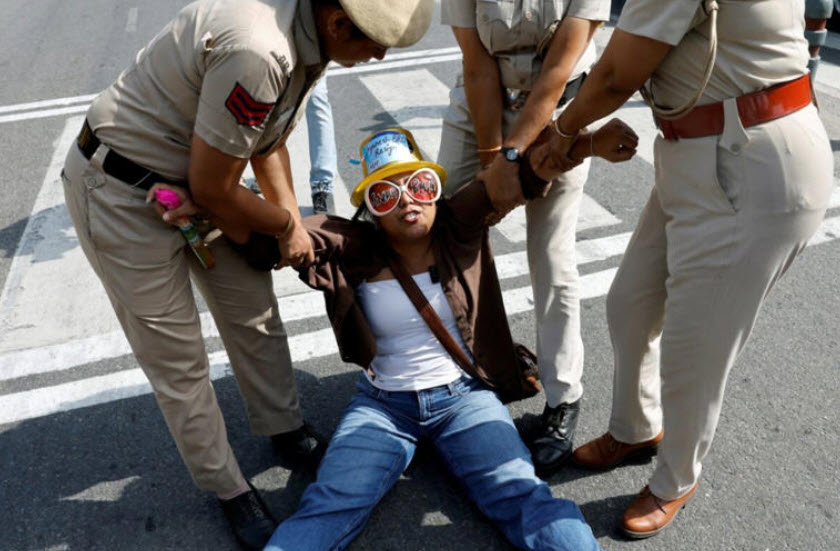
More than 20 United Nations human rights experts have called for an independent investigation into alleged excessive police force and arbitrary detentions during youth-led protests across India, expressing concern over restrictions on peaceful demonstrations.
The experts, issuing a joint statement in Geneva on Tuesday, criticised what they described as a repeatedly heavy-handed police response to demonstrations in New Delhi and other cities over the past three months. They urged authorities to protect peaceful assembly and ensure accountability for alleged human rights violations.
The statement called for an independent, impartial and thorough investigation into the conduct of law enforcement agencies and affiliated forces, alongside justice and reparations for victims of established abuses.
The experts demanded an immediate end to excessive force, blanket restrictions on public gatherings, misuse of digital surveillance and disruptions to internet services.
They said security personnel had reportedly used batons against unarmed students and prevented thousands of demonstrators from participating in protests, despite the largely non-violent character of the gatherings.
According to information received by the experts, more than 7,000 young people, journalists, lawyers, human rights defenders and political activists were allegedly detained in New Delhi and transferred to distant detention facilities.
The statement alleged that detainees had their mobile phones confiscated and protest-related material deleted. Most were reportedly released within 24 hours, including several protest organisers.
The experts also expressed concern about injuries sustained by demonstrators and allegations of ill-treatment, sexual violence and other forms of gender-based abuse during protests and detention.
Their intervention follows demonstrations organised by student associations, opposition parties and the youth-led Cockroach Janta Party against changes to electoral rolls and government decisions affecting education.
The protests have intensified over the Election Commission’s Special Intensive Revision of electoral rolls, which critics say has resulted in the deletion of approximately 130 million names.
Protest organisers allege that the exercise disproportionately affects disadvantaged communities, including Muslims, Scheduled Castes and Scheduled Tribes. The Election Commission maintains that revisions are intended to remove duplicate and ineligible entries and improve electoral accuracy.
Demonstrators have demanded the resignation of Chief Election Commissioner Gyanesh Kumar, accusing the electoral authorities of compromising the fairness of the voting process. The ruling Bharatiya Janata Party and election authorities have rejected allegations of politically motivated manipulation.
Police have defended restrictions on demonstrations by citing public order concerns, prohibitory regulations and alleged violations of conditions governing assemblies.
The UN experts nevertheless maintained that restrictions on peaceful gatherings must satisfy international legal requirements of legality, necessity and proportionality.
They expressed particular concern over the reported invocation of Section 163 of the Bharatiya Nagarik Suraksha Sanhita, which permits authorities to issue preventive orders under specified circumstances.
According to the statement, these powers had allegedly been used to impose broad assembly restrictions, disrupt public transportation and facilitate internet shutdowns.
The experts warned that indiscriminate restrictions could undermine fundamental protections covering freedom of expression, personal liberty and peaceful assembly.
Human Rights Watch separately accused police of using unnecessary force against protesters and detaining people without adequate justification. Its Asia director, Elaine Pearson, urged authorities to engage with demonstrators over concerns about electoral fairness rather than suppress peaceful participation.
Amnesty International, CIVICUS, Front Line Defenders and South Asians for Human Rights also demanded the release of people arbitrarily detained for exercising their right to peaceful assembly.
Their joint intervention highlighted alleged mistreatment of journalists, lawyers and human rights defenders, alongside restrictions affecting communication and movement.
The UN experts said allegations of sexual violence and gender-based abuse required particular scrutiny, including consideration of the different consequences that policing measures could have for women participating in demonstrations.
They also cautioned against the misuse of biometric technologies and other surveillance measures to identify, monitor or intimidate people exercising their rights.
The statement referred to an earlier incident in March involving 10 student and labour-rights activists who were reportedly detained by plain-clothes officers in New Delhi.
Those activists were allegedly held without outside communication for more than 24 hours and subjected to threats, coercion and ill-treatment before being released following habeas corpus proceedings.
The experts said the March allegations formed part of their wider concerns about restrictions on civic participation and the treatment of student activists.
The signatories are independent human rights specialists appointed under United Nations Human Rights Council procedures. They examine alleged violations and communicate concerns to governments but do not exercise judicial authority or issue legally binding rulings.
Their statement also urged authorities to examine the gender-specific consequences of restrictions on peaceful assembly and alleged reprisals against protesters, including the treatment of women during detention and police questioning.


