Kwatra responded after Jayapal, a Democratic member of the US House of Representatives from Washington state, expressed alarm over the removal of approximately 130 million names from voter lists during the Election Commission’s Special Intensive Revision (SIR).
“The remarks by @RepJayapal on India’s electoral and political processes are unacceptable interference in India’s internal affairs,” Kwatra wrote on X on October 15.
He defended the country’s electoral institutions, saying India was a vibrant democracy with independent constitutional bodies and a longstanding record of free and fair elections. Nevertheless, he offered to discuss the matter with Jayapal to address what he described as her misconceptions.
The diplomatic exchange followed Jayapal’s public criticism of the electoral exercise and her endorsement of peaceful demonstrations challenging the handling of voter registration. Her remarks placed the dispute over electoral rolls before a wider American political audience as opposition protests continued across India.
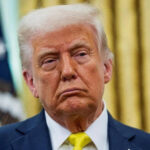
Jayapal said she was deeply concerned about what she characterised as the government’s removal of 130 million people from voting registers. She drew a comparison with efforts by President Donald Trump’s administration in the United States that, in her assessment, threatened voting rights.
The Congresswoman also expressed support for non-violent resistance to what she called anti-democratic efforts, arguing that citizens should be able to participate in free and fair elections. Her allegations concerned the consequences of the revision rather than any specific finding of misconduct by a court.
The figure of 130 million has become central to the controversy surrounding the SIR. However, the removal of names from electoral rolls does not, by itself, establish that every person affected was eligible to remain registered or that each deletion was improper.
The Election Commission says the revision is intended to identify duplicate entries, deceased voters and people who have moved, while ensuring that electoral registers accurately reflect eligible residents. Opposition parties and voting rights campaigners contend that documentation requirements and administrative errors have also excluded legitimate voters.
Disagreements over the exercise have intensified because people whose names are omitted may have to navigate claims, objections or appeals before their registration is restored. Critics warn that those procedures can be especially difficult for migrant workers, poorer households and elderly citizens who lack readily available documentation.
The dispute has prompted demonstrations demanding greater transparency and accountability from the Election Commission, headed by Chief Election Commissioner Gyanesh Kumar. Opposition leaders have accused the poll authority of acting in a manner favourable to the ruling Bharatiya Janata Party, allegations that remain contested.
India’s government and electoral authorities have defended the need for accurate registers, maintaining that the revision serves the integrity of elections. The central question is whether safeguards are sufficient to prevent eligible citizens from losing their voting rights during the process.
The Supreme Court has also been drawn into litigation over electoral revisions. Petitioners have challenged aspects of the exercise and sought judicial scrutiny of procedures governing voter registration and deletion, making the treatment of affected electors a matter of continuing legal examination.
On Thursday, the court issued notices to election officials in proceedings involving opposition petitions. The litigation adds a separate institutional dimension to the political dispute, although the issuance of notice should not be mistaken for a judicial determination that the allegations have been proved.
Kwatra’s response did not set out a detailed numerical rebuttal to Jayapal’s estimate or address individual cases of allegedly wrongful deletion. Instead, his statement emphasised India’s constitutional institutions and rejected the legitimacy of outside political criticism of the electoral process.
The controversy has also raised questions about how electoral authorities communicate changes to voter lists, particularly where large numbers of deletions are involved. The distinction between draft omissions, final deletions and successful reinstatements remains important when assessing their impact.
Jayapal, who represents a district in Washington state, has spoken on democratic rights and civil liberties in both American and international contexts. Her intervention was made publicly on X rather than through a formal congressional resolution or an announced legislative initiative.
Kwatra’s invitation to a constructive conversation left open the possibility of direct engagement between the ambassador and the Congresswoman, despite his objection to the language and implications of her remarks.