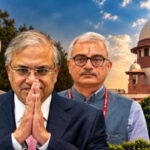
Mohan, responding to a contempt notice through an affidavit, maintained that measures imposed during the October 10 protests were necessary to preserve public order. He requested the court to discharge the contempt notice, arguing that the authorities had acted in good faith under exceptional circumstances.
The affidavit, submitted late Wednesday, defended the temporary suspension of cellular internet services within a four-kilometre radius of Raisina Hills, the administrative centre of New Delhi. The restrictions operated for 24 hours, beginning at 10 pm on October 9 and ending at 10 pm the following day.
Mohan stated that Delhi Police had sought the suspension because of apprehensions about disturbances during demonstrations against Chief Election Commissioner Gyanesh Kumar and the Election Commission’s Special Intensive Revision of electoral rolls.
The request was considered proportionate to the anticipated security situation, he submitted, emphasising that the restrictions were geographically limited and imposed for a defined period.
The Home Secretary clarified that the suspension covered cellular internet connectivity alone. Broadband connections, Wi-Fi networks and other telecommunications services were not included in the shutdown order.
He also requested modification of the Supreme Court’s October 11 direction requiring uninterrupted internet facilities, seeking recognition that temporary suspensions could be authorised in exceptional circumstances, subject to statutory requirements and safeguards.
The submission places before the court a distinction between the government’s acknowledgement of judicial authority and its defence of emergency security measures. Whether those measures complied with the earlier directions remains a matter for judicial determination.
The Supreme Court issued contempt notices on October 11 to Mohan, Delhi Police Commissioner Anurag Kumar and Delhi Metro Rail Corporation chairperson D Thara after examining allegations that authorities had disregarded its October 9 directions concerning public transport during the demonstrations.
A bench comprising Justices Joymalya Bagchi and V Mohana found that the allegations disclosed a prima facie case requiring explanations from the officials concerned. That preliminary finding did not amount to a determination that contempt had been committed.
The proceedings followed a petition filed by advocate Shailendra Mani Tripathi, alleging that restrictions on Metro operations had violated the court’s prohibition against a complete shutdown of public transport.
The judges directed the officials to submit counter-affidavits and compliance information explaining how the October 9 order had been implemented.
Delhi Police separately defended its actions, maintaining that intelligence assessments had indicated threats to public safety and that protest organisers had breached earlier undertakings. Police authorities also offered an unconditional apology while asserting that their decisions were taken lawfully and without an intention to disregard judicial instructions.
The Delhi Metro Rail Corporation, responding to the same proceedings, maintained that its train services had continued operating despite restrictions on passenger access at selected stations.
Its affidavit stated that 271 trains completed 4,157 scheduled trips on October 10. Entry and exit restrictions affected 45 of the network’s 303 stations, representing approximately 15 per cent of the total.
The corporation said these limitations followed police instructions and did not constitute a complete suspension of Metro operations. It also offered an unconditional apology while disputing allegations that the network had been shut down.
During the October 11 hearing, Solicitor General Tushar Mehta informed the court that Metro services had continued and that restrictions at affected stations had been lifted by 10 pm on October 10.
The court nevertheless required explanations concerning the implementation of its directions, which were intended to ensure that security arrangements did not unnecessarily obstruct essential transport services or lawful movement.
Separate proceedings before the Supreme Court addressed allegations of unlawful detention of demonstrators, including political leaders, and restrictions affecting lawyers and journalists during the protests.
The judges also directed that internet facilities should function unhindered and emphasised the need to preserve access to courts and essential services.
The demonstrations centred on demands concerning the Election Commission and its electoral roll revision exercise. Authorities had denied permission for the proposed gathering at Jantar Mantar, citing public order concerns and anticipated mobilisation.
The Home Secretary’s four-page affidavit specifically addressed the cellular internet suspension and the government’s request for judicial permission to impose comparable restrictions when legally justified by public safety requirements.