By Dr. Ram Puniyani
In current times when we are witness to many mechanisms of political propaganda affecting social thinking, food habits are also one of the components of the divisive political tendencies. It is in the air that Muslims are more violent in their tendencies as they consume non-vegetarian food. The Hindu angle of the holy cow and suspicion of beef-eating led to lynching mobs killing and maiming Muslims and Dalits in shocking acts of public brutality. The segregation of people in housing societies based on food habits is also prevalent, as with many majoritarian society complexes policing food habits of tenants and prospective inhabitants before permitting the sale of flats. This got highlighted in a more complex way recently in West Bengal. It also showed with what speed and limitations the advice of preventing the non-vegetarian food near the Durga Puja pandals should be given. Also, a section of society has been propagating that the sale of non-vegetarian food be banned during the Jain festival of Paryushan.
The advice of Dhirendra Krishna Shastri (whom Prime Minister Modi calls his younger brother) in this regard, invited mixed reactions from Indians. Currently, West Bengal is celebrating its biggest festival, Durga Puja. Already, with the capture of state power, BJP’s political assertion in West Bengal has been off the charts, accompanied by heavy promotion of Lord Ram, even though Bengali Hindus don’t really worship Ram. Lord Ram has yielded rich electoral dividends for the BJP in North India, affecting the electoral scenario in India as a whole.
With the BJP government inviting Shastri of Bageshwar Dham, who had come for Hanuman Katha in Howrah’s Liluah, just ahead of Durga Puja, the systematically promoted Hindu monk advised Bengalis to keep non-vegetarian food away from Durga puja pandals. A similar advice was already proffered by RSS affiliate VHP. This diktat has expectedly triggered a political storm among Bengali Hindus, including those calling themselves “Hindu nationalists”. There were statements and protests from prominent Bengalis that Shastri should not teach them how to celebrate Durga Puja and what to eat and what not.
The reaction was due to the fact that fish and goat meat as ‘bhog’ or offering to the goddess during Durga Puja festival are mandatory items. Many of them underlined that fish is very crucial to Bengali culture, and the broad umbrella of Hindu religion has many tendencies where non-vegetarian food is part of the ritual. Many from former Tripura Governor Tathagata Roy to journalists and content creators, people from a diverse section, including those who described themselves as “Bengali Hindu nationalists”, retaliated. “Don’t tell a Bengali how to celebrate Durga Puja,” Kolkata-based content creator Shreyasi Biswas Banerjee wrote on Facebook. Biswas underlined that an “outsider” was prescribing rules for a festival embedded in Bengal’s distinct religious and culinary traditions. Few people even tore up Shastri’s posters in protest.
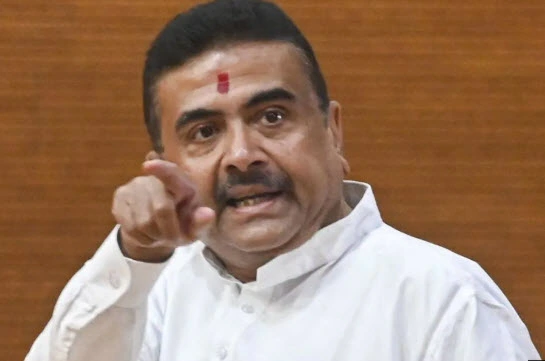
However, Chief Minister Suvendu Adhikari, who had received Shastri with great pomp and ceremony, attended an event at a Durga temple and consumed the fish in prasad. Many of the BJP-supporting Bengali Hindus reiterated the core value of fish in Bengali culture. India is a country full of diversities in all matters, food, clothing, language and religion. Hindus also have many sects and many diverse food habits. We have Kashmiri Pandits for whom mutton dishes as an inalienable part of their culture. The food habits are decided by multiple factors, geographical location being an important part of that. In coastal areas, sea food is an important part of their diet.
At the recently-held BRICS meeting, only vegetarian food was served. Chinese President Xi Jinping skipped the vegetarian-only dinner, whatever be his reasons. While keeping only vegetarian food for international guests was criticised by the opposition parties, Union minister Kiran Rijiju defended it by saying that the guests appreciated the menu. However, this painted a false portrait of the highly diverse Indian cuisine culture, indicating that it is vegetarian, when over 80 percent of all Indians are meat-eating. On a similar note, the UP government led by CM Yogi Adityanath recently published a map of important food items from all districts of UP, in which Lucknow’s famous tunde kabab was missing, and far lesser-known vegetarian items were presented, as if UP consumes only the vegetarian fare.
In yet another incident, 14 Muslim youths were put behind the bars for having chicken biryani in their iftar party while on a boat ride in the Ganga River. Ironically, not long after, some Hindus who consumed liquor during their boat ride on the same hallowed Ganga, were not touched at all. Such blatant communal practices of the BJP-ruled states have now become commonplace, and have also attracted sharp criticism from human rights groups as well as the secular sections of the civil society.
In Gujarat where BJP is in power for the last three decades, by and large non-vegetarian joints have been more or less invisibilised. Many people go to the restaurants near Gujarat border and satisfy their cravings for non-vegetarian food.
It is a dilemma for BJP to keep balancing between Indian’s prevalent food habits and their agenda of imposing vegetarianism. Somehow BJP associates non-vegetarianism with Muslims in particular and this bypassing of non-vegetarian food, an essential part of Indian food habits, irrespective of religion of the people, is at the crux of BJP’s food fascism. They get away with this aggressive vegetarianism in places like in Gujarat, while in West Bengal, they are still facing stiff opposition, at least in the gastronomic arena. Figures like Shastri, the likes of whom have mushroomed over the last couple of decades, are therefore a staple for RSS-BJP politics of imposing uniform code of vegetarianism, going against the very grain of Indian dietary diversity . (IPA Service)