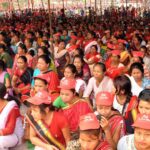
Dipke made the declaration after education reform activist Sonam Wangchuk ended a 26-day hunger strike following negotiations with senior government representatives. He said Wangchuk’s decision would not weaken the campaign or alter its central demand for ministerial accountability.
“We are relieved and grateful that Sonam sir has ended his hunger strike after 26 days. His life is very valuable for the nation,” Dipke said in a video message. “Our peaceful protest will continue until Dharmendra Pradhan resigns.”
Wangchuk broke his fast at Medanta Hospital in Gurugram in the presence of Union ministers JP Nadda and Jitendra Singh. He said the step followed prolonged discussions and appeals from political leaders, including dozens of members of Parliament, who had urged him to protect his health.
The activist had begun fasting on June 28 as anger over alleged examination leaks, recruitment irregularities and the handling of student demonstrations expanded into a broader protest movement. His health deteriorated during the strike, prompting hospitalisation and warnings from doctors about dehydration and other complications.
Wangchuk said he ended the fast after receiving assurances on several concerns, including protection for peaceful demonstrators from legal action. He also appealed to supporters to avoid violence as negotiations between protest representatives and the government continued.
Dipke welcomed the end of the hunger strike but insisted that the sacrifices made by students and supporters could not be allowed to produce only verbal promises. He said the movement would continue through peaceful demonstrations until responsibility was fixed for failures in the examination system.
The CJP has made Pradhan’s resignation its principal political demand, arguing that administrative accountability must extend beyond arrests of intermediaries, examination contractors and suspected paper-leak operators. Protest leaders say repeated irregularities have damaged confidence among millions of candidates competing for limited university places and government jobs.
The movement emerged after comments comparing unemployed young people to cockroaches triggered an online backlash. Organisers adopted the term as a satirical identity and used social media platforms to mobilise students, jobseekers and civil society groups. Dipke, a political communications strategist from Maharashtra, has become its most recognisable organiser.
Demonstrations have since spread beyond the capital, combining demands over the medical entrance examination with wider complaints about unemployment, delayed recruitment, examination cancellations and weak safeguards against fraud. The mobilisation has also drawn support from opposition parties, though CJP organisers have sought to portray the campaign as a youth-led platform rather than an extension of any established political organisation.
Tensions around Jantar Mantar intensified this week as police detained protesters travelling towards the demonstration site. More than 200 people were detained over two days, while two individuals were arrested for allegedly carrying weapons. Students from Jamia Millia Islamia and Delhi University were among those stopped while carrying posters, police said.
Prime Minister Narendra Modi has promised stronger action against those responsible for examination leaks, including measures aimed at officials who assist organised cheating networks. The government has also indicated support for faster trials and tougher legal provisions, but protesters maintain that enforcement failures cannot be addressed through legislation alone.
Opposition leader Rahul Gandhi has demanded Pradhan’s departure, action against police personnel accused of assaulting demonstrators and protection for peaceful protesters. His intervention has increased political pressure on the government while giving the agitation greater visibility inside Parliament.
Government representatives are expected to continue discussions with protest leaders, creating a parallel track of negotiations and street mobilisation. CJP organisers have said they are prepared to participate in talks but will not suspend demonstrations merely because dialogue has begun.
(IPA Service)